 अंग्रेज़ी
 स्पेनिश
 फ़्रेंच
 बंगाली
 रूसी
 अरबी
 तुर्की

अवलोकन
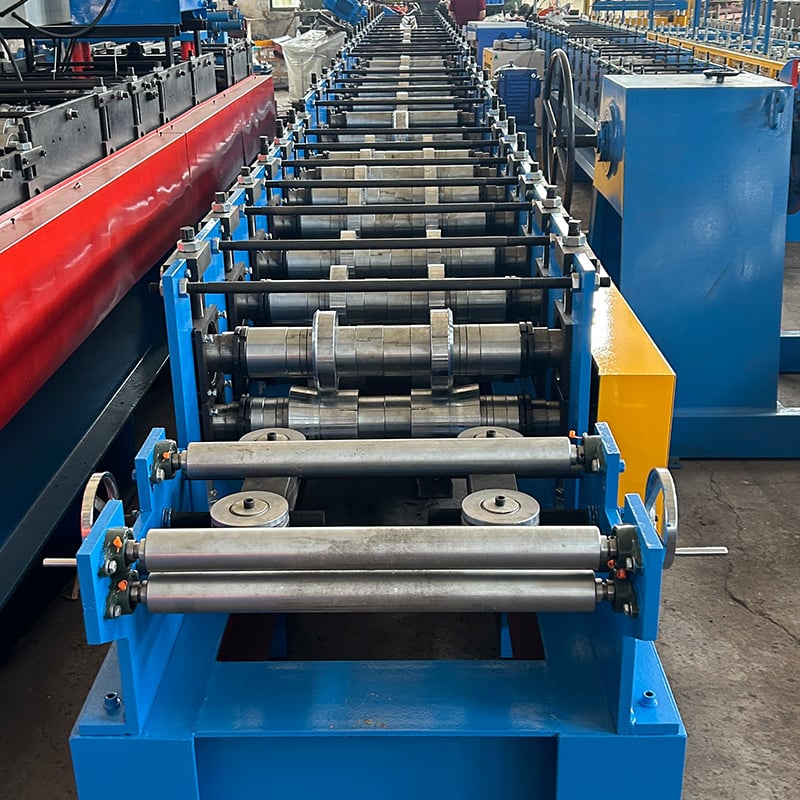
स्टील रोल फॉर्मिंग मशीनें are the backbone of metal fabrication industries, offering precision and efficiency in shaping metal sheets into desired profiles. These machines are indispensable in various industries, from construction to automotive, thanks to their ability to produce consistent and complex shapes with high accuracy. This guide provides a comprehensive look at steel roll forming machines, their types, components, working processes, and how to choose the right one for your needs.
स्टील रोल फॉर्मिंग मशीन मार्गदर्शिका
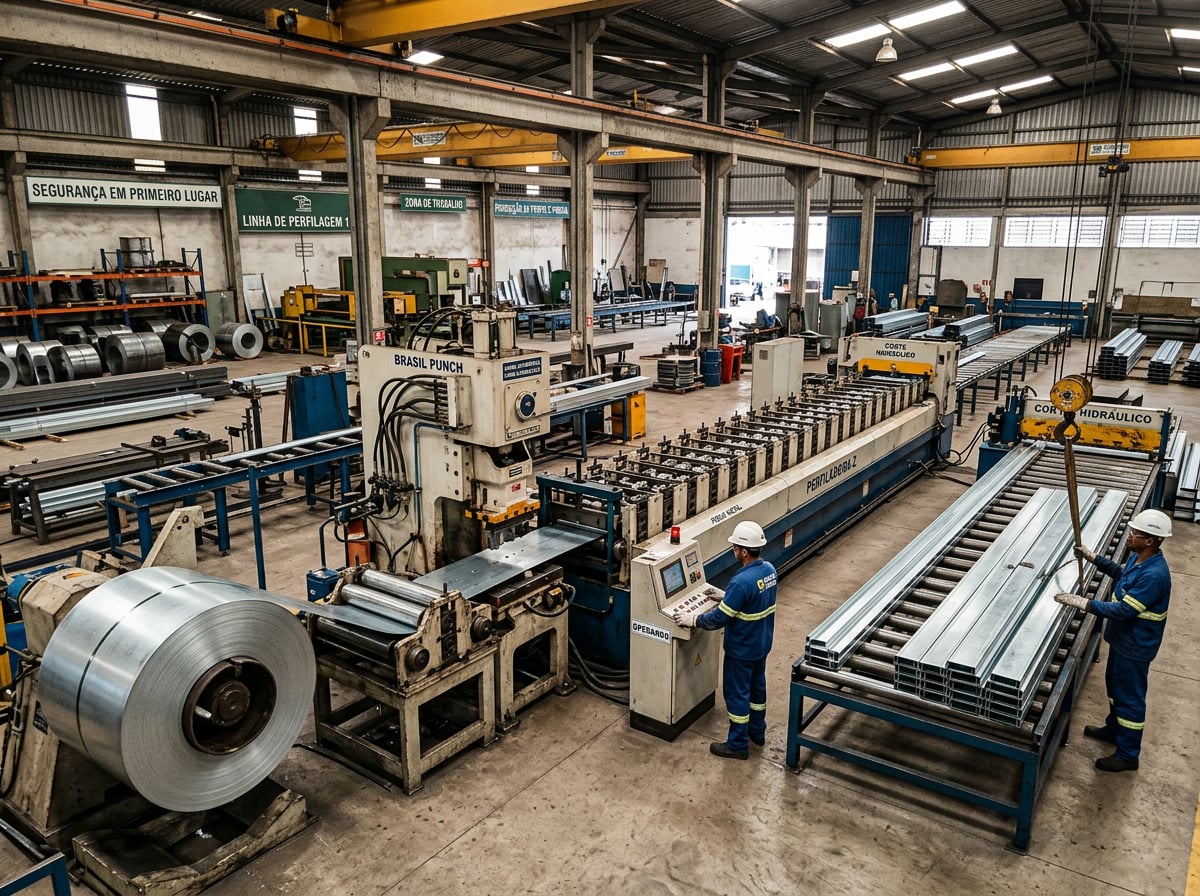
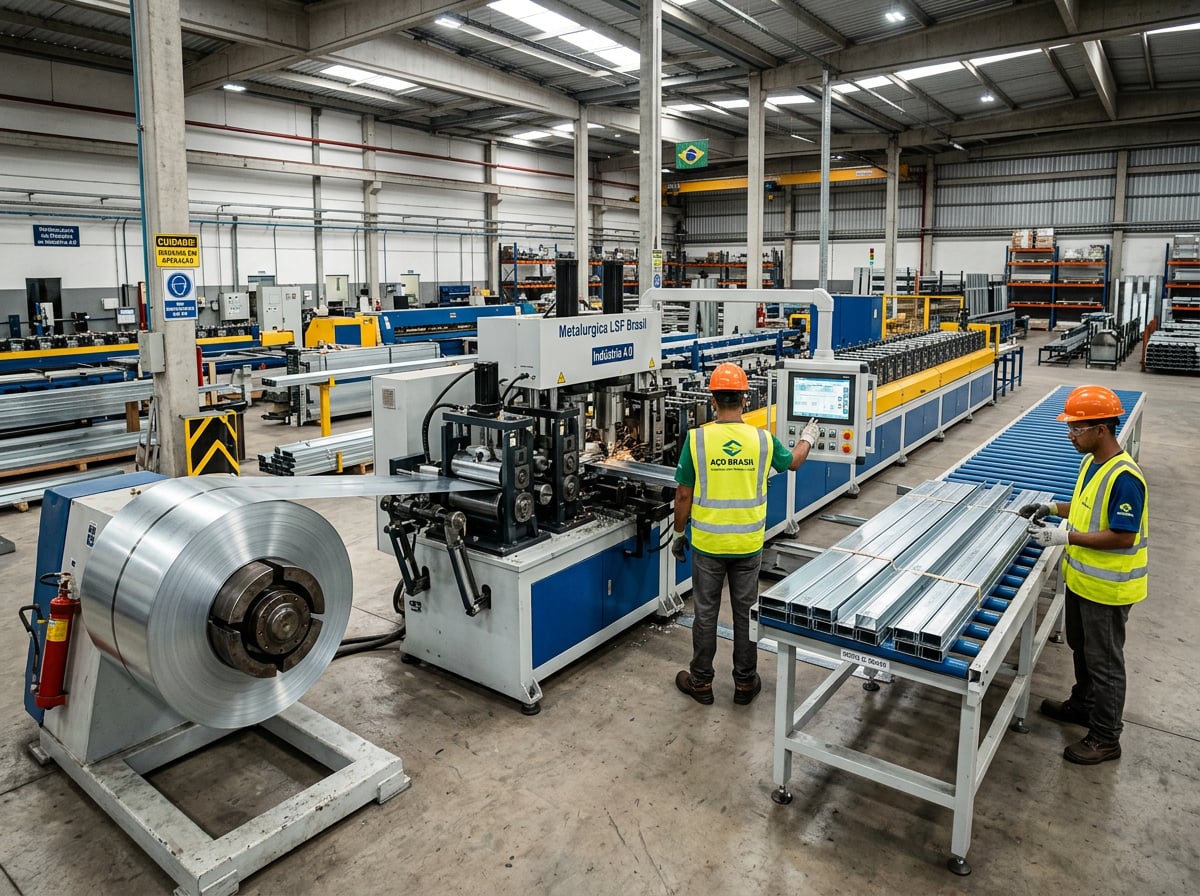
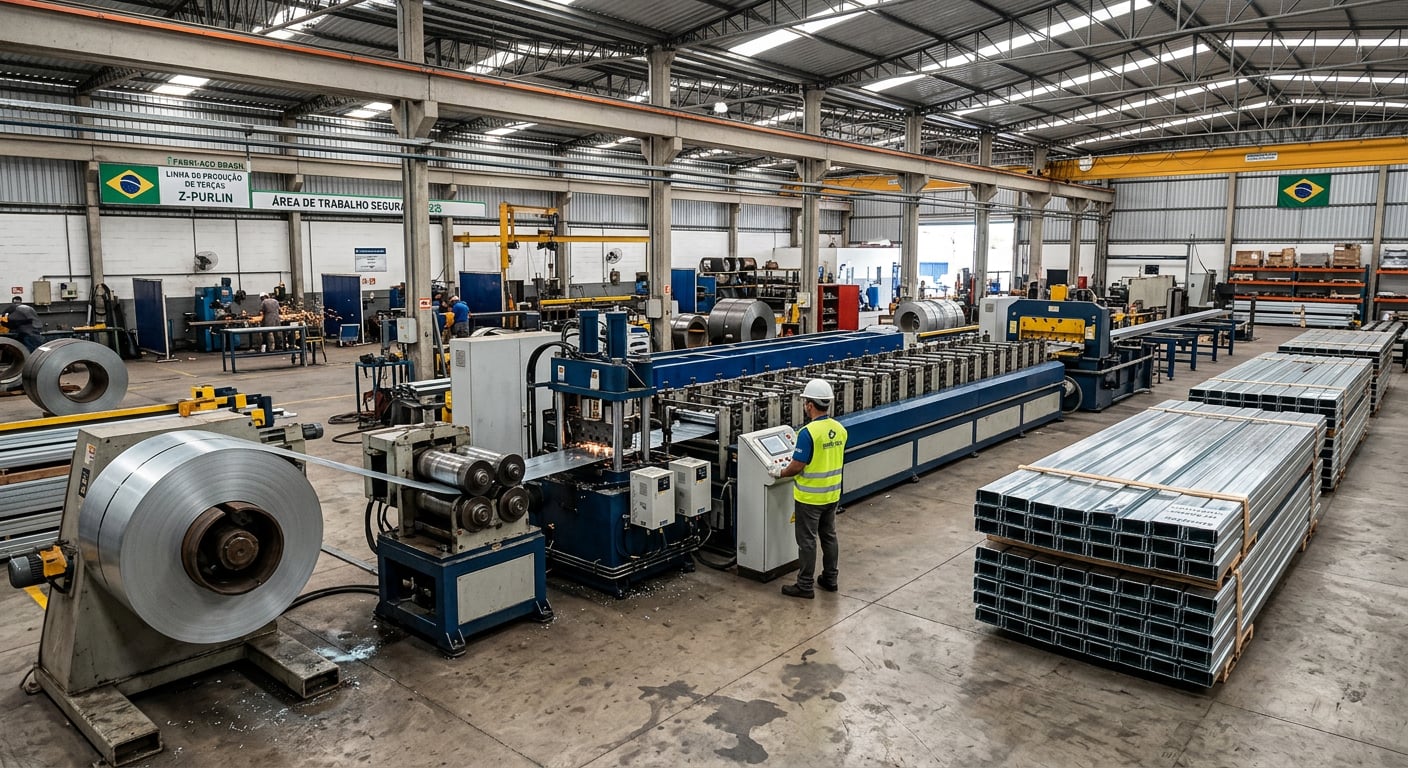
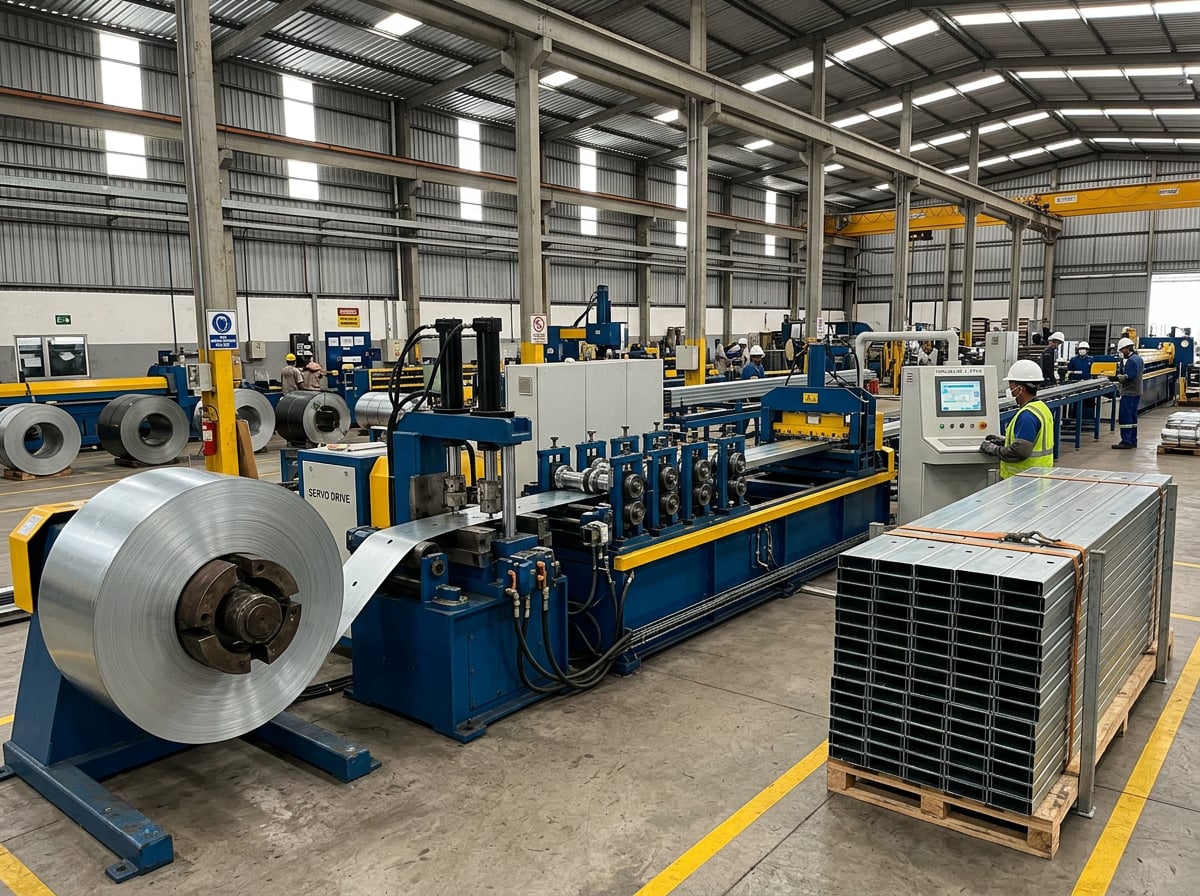
Roll forming is a continuous bending operation in which a long strip of sheet metal (typically coiled steel) is passed through sets of rolls mounted on consecutive stands, each set performing only an incremental part of the bend, until the desired cross-section profile is obtained. Roll forming is ideal for producing long lengths of metal profiles in large quantities.
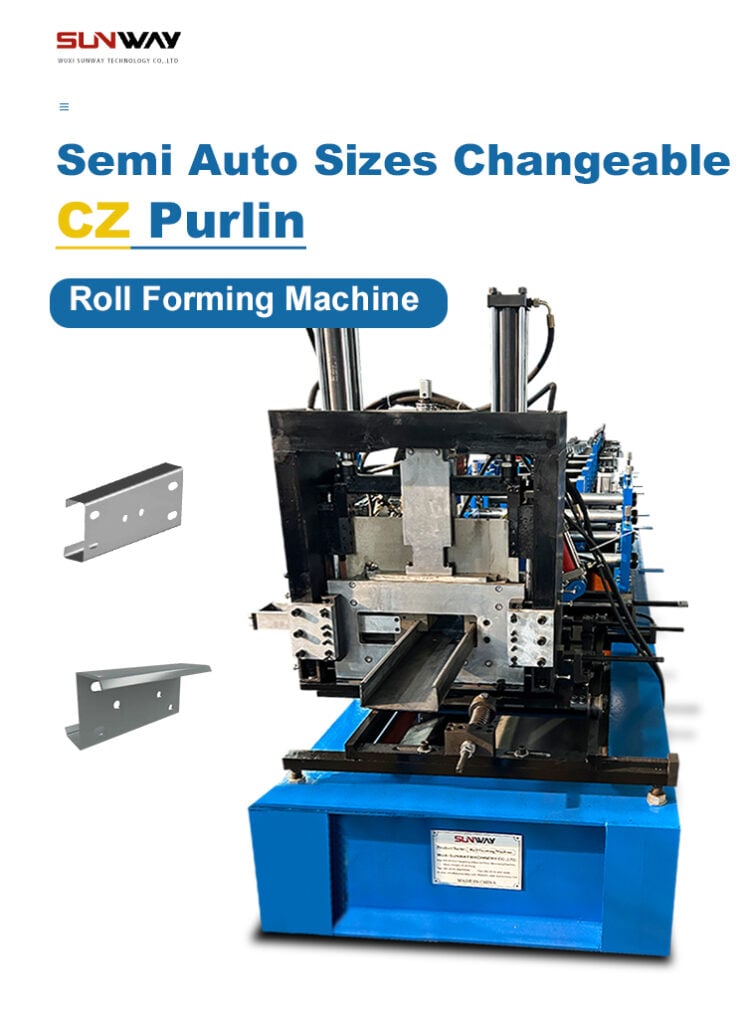
प्रिसिजन रोल फॉर्मिंग मशीन के प्रकार
Here are specific models of metal powder and their applications:
| मॉडल | विवरण |
|---|---|
| RSFM-100 | High-speed roll forming machine suitable for producing complex profiles at high precision. |
| RSFM-200 | Versatile machine capable of forming a wide range of materials, including aluminum and stainless steel. |
| RSFM-300 | Heavy-duty roll forming machine designed for thicker materials and heavy industrial applications. |
| RSFM-400 | Compact roll forming machine ideal for small-scale operations and workshops. |
| RSFM-500 | Advanced roll forming machine with automated control systems for enhanced efficiency. |
| RSFM-600 | High-capacity machine designed for large-scale production with quick changeover capabilities. |
| RSFM-700 | Customizable roll forming machine with modular design for specific profile requirements. |
| RSFM-800 | Precision roll forming machine for producing intricate designs and high-quality finishes. |
| RSFM-900 | Energy-efficient roll forming machine with low operational costs and high throughput. |
| RSFM-1000 | High-speed roll forming machine with integrated cutting and punching systems for seamless production. |
हाई-स्पीड रोल फॉर्मिंग मशीन की कार्य प्रक्रिया
The working process of a high-speed roll forming machine involves several stages, each critical for ensuring the final product meets the required specifications. Here’s a step-by-step guide to how these machines operate:
- सामग्री फीडिंग: The process begins with feeding a metal coil into the machine. The coil is unwound and straightened to remove any curvature or imperfections.
- रोल स्टैंड्स: The straightened metal strip passes through a series of roll stands. Each stand incrementally bends the metal, gradually forming the desired profile. This step ensures precision and consistency.
- कटिंग और पंचिंग: As the metal strip moves through the machine, integrated cutting and punching systems create holes, notches, or cut the strip to length. This step is crucial for applications requiring specific features or lengths.
- फॉर्मिंग: The final shape is achieved as the metal strip exits the last roll stand. Depending on the machine’s configuration, additional processes such as edge trimming or embossing may occur.
- आउटपुट: The finished product is collected, ready for further processing or assembly.
मुख्य घटक और उनके कार्य
Understanding the key components of a स्टील रोल फॉर्मिंग मशीन is essential for operating and maintaining the equipment effectively. Here are the main parts and their functions:
| घटक | कार्य |
|---|---|
| डिकॉयलर | धातु कॉइल को पकड़ता है और मशीन में फीड करता है। |
| रोल स्टैंड्स | Houses the rollers that bend the metal into the desired shape. |
| कटिंग सिस्टम | Cuts the metal strip to length and creates necessary features like holes or notches. |
| कंट्रोल पैनल | Allows the operator to control and monitor the machine’s operations. |
| गाइडिंग सिस्टम | यह सुनिश्चित करता है कि मशीन से गुजरते समय धातु की पट्टी ठीक से संरेखित रहे। |
| ड्राइव सिस्टम | मशीन के रोलरों और अन्य गतिशील भागों को शक्ति प्रदान करता है। |
| हाइड्रॉलिक सिस्टम | Provides the necessary pressure for cutting and punching operations. |
| आउटपुट टेबल | Collects the finished product for easy handling and transport. |
| सुरक्षा गार्ड | Protects operators from moving parts and ensures safe operation. |
-
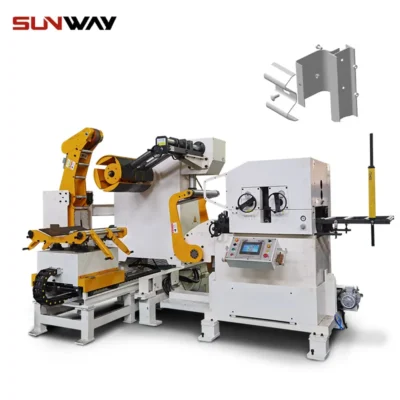 हाईवे गार्डरेल एंड टर्मिनल फॉर्मिंग मशीन अधिक पढ़ें
-
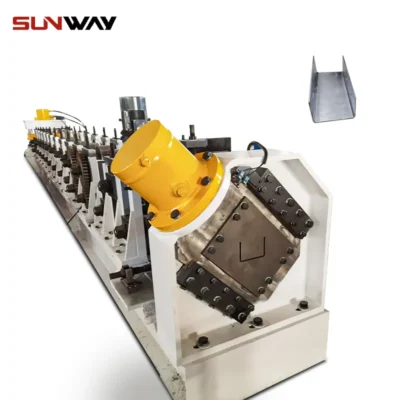 हाईवे U/C पोस्ट रोल फॉर्मिंग मशीन अधिक पढ़ें
-
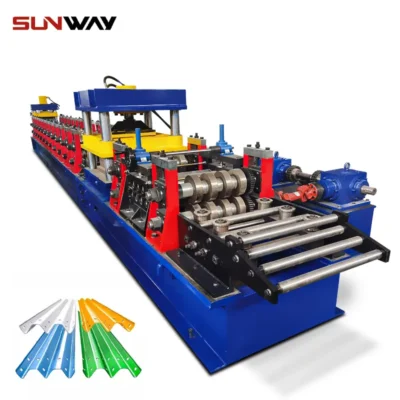 2 वेव्स हाईवे गार्डरेल रोल फॉर्मिंग मशीन अधिक पढ़ें
-
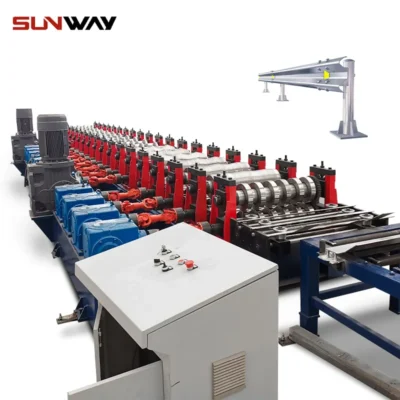 3 वेव्स हाईवे गार्डरेल रोल फॉर्मिंग मशीन अधिक पढ़ें
-
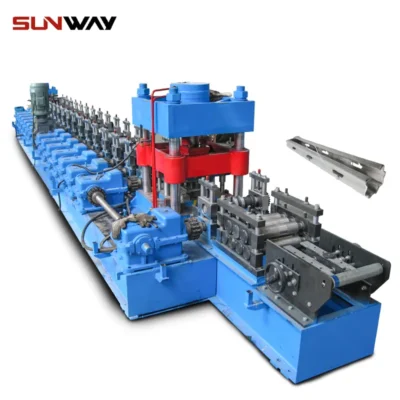 वाइनयार्ड पोस्ट रोल फॉर्मिंग मशीन अधिक पढ़ें
-
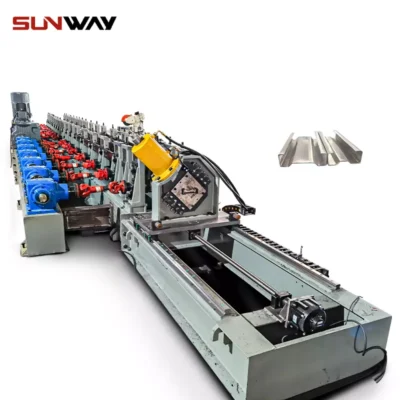 ऑटो साइज चेंजेबल सिग्मा पर्लिन रोल फॉर्मिंग मशीन अधिक पढ़ें
-
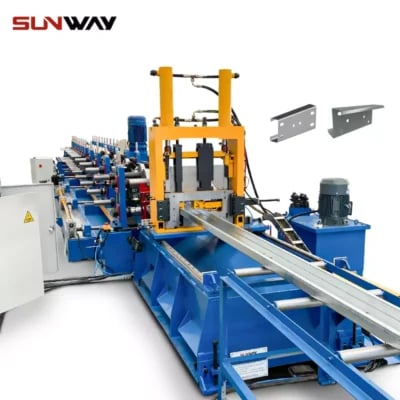 स्वचालित आकार बदलने योग्य C Z पर्लिन रोल फॉर्मिंग मशीन अधिक पढ़ें
-
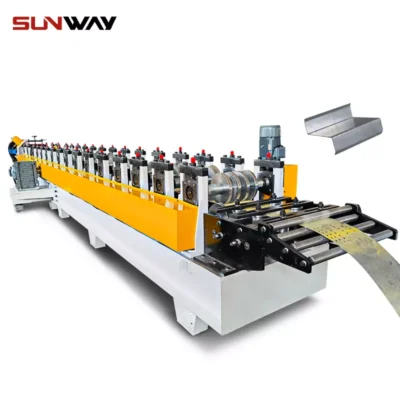 स्वचालित आकार बदलने योग्य Z पर्लिन रोल फॉर्मिंग मशीन अधिक पढ़ें
-
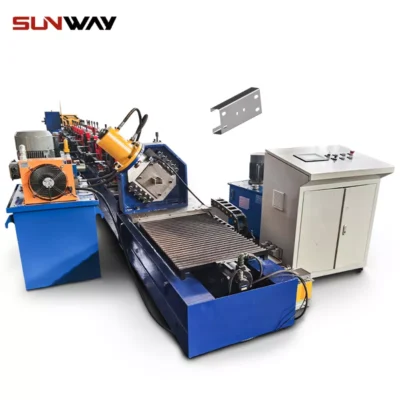 स्वचालित आकार बदलने योग्य C U पर्लिन रोल फॉर्मिंग मशीन अधिक पढ़ें
मशीन की गति और दक्षता
The efficiency and speed of a roll forming machine are critical factors in determining its productivity. Here is a comparison of different models:
| मॉडल | गति (meters/min) | दक्षता (units/hour) | ऊर्जा खपत (kW) |
|---|---|---|---|
| RSFM-100 | 20 | 1200 | 10 |
| RSFM-200 | 25 | 1500 | 12 |
| RSFM-300 | 15 | 1000 | 8 |
| RSFM-400 | 10 | 800 | 6 |
| RSFM-500 | 30 | 1800 | 15 |
| RSFM-600 | 35 | 2100 | 18 |
| RSFM-700 | 20 | 1200 | 10 |
| RSFM-800 | 40 | 2400 | 20 |
| RSFM-900 | 22 | 1300 | 11 |
| RSFM-1000 | 50 | 3000 | 25 |
अनुकूलित यांत्रिक पैरामीटर
Roll forming machines can be customized to meet specific requirements. Here are some customizable parameters:
| पैरामीटर | विवरण |
|---|---|
| रोलर व्यास | Customizable to accommodate different material thicknesses and profiles. |
| रोल स्टैंडों की संख्या | Can be adjusted based on the complexity of the profile being formed. |
| सामग्री की चौड़ाई | The width of the metal strip can be customized to suit specific applications. |
| कटिंग लंबाई | Adjustable to produce metal pieces of varying lengths. |
| Punching Patterns | Customizable punching patterns to create specific hole shapes and sizes. |
| फॉर्मिंग गति | Speed can be tailored to match production requirements and material characteristics. |
| स्वचालन स्तर | Machines can be equipped with various levels of automation for enhanced efficiency. |
| कॉइल भार क्षमता | Can be designed to handle different coil weights depending on production needs. |
| ड्राइव सिस्टम | Different drive systems (e.g., hydraulic, electric) can be chosen based on performance needs. |
| सुरक्षा सुविधाएँ | Enhanced safety features can be added to meet regulatory standards and ensure operator safety. |
अनुप्रयोग और उपयोग
Steel roll forming machines are used in various industries due to their versatility and efficiency. Here are some common applications:
| उद्योग | अनुप्रयोग |
|---|---|
| निर्माण | Production of roofing panels, wall claddings, and structural components. |
| ऑटोमोटिव | Manufacturing of automotive body parts, chassis, and interior components. |
| एयरोस्पेस | Creation of lightweight and durable components for aircraft. |
| फर्नीचर | Production of metal frames, shelving units, and other furniture parts. |
| HVAC | Manufacturing of ductwork, vents, and other heating, ventilation, and air conditioning parts. |
| उपकरण | Creation of metal casings, panels, and structural parts for household appliances. |
| भंडारण | Production of shelving units, storage racks, and containers. |
| विद्युत | Manufacturing of cable trays, electrical enclosures, and other components. |
| Railway | Creation of railway track components and structural parts. |
| कृषि | Production of metal structures and components for agricultural machinery and equipment. |
स्थापना, संचालन और रखरखाव
Proper installation, operation, and maintenance are crucial for the efficient functioning of steel roll forming machines. Here are some guidelines:
| पहलू | विवरण |
|---|---|
| स्थापना | Ensure a stable and level foundation, proper alignment of components, and secure electrical connections. |
| संचालन | Follow manufacturer’s guidelines, ensure proper material feeding, and monitor machine parameters regularly. |
| रखरखाव | Regularly check and lubricate moving parts, inspect for wear and tear, and replace damaged components promptly. |
आपूर्तिकर्ता और मूल्य सीमा का विवरण
Choosing the right supplier and understanding the price range is essential for making an informed purchase. Here are some details:
| आपूर्तिकर्ता | मूल्य सीमा (USD) |
|---|---|
| ABC Machinery | $20,000 – $50,000 |
| XYZ Equipment | $25,000 – $60,000 |
| Roll Form Tech | $30,000 – $70,000 |
| फॉर्मिंग समाधान | $40,000 – $80,000 |
| Industrial Roll Form | $35,000 – $75,000 |
| Metal Master | $50,000 – $100,000 |
| Steel Tech | $45,000 – $90,000 |
| Precision Roll | $55,000 – $110,000 |
| Advanced Machinery | $60,000 – $120,000 |
| Ultimate Forming | $65,000 – $130,000 |
आपूर्तिकर्ता कैसे चुनें
Selecting the right supplier for a steel roll forming machine is crucial for ensuring quality and reliability. Here are some factors to consider:
| कारक | विवरण |
|---|---|
| प्रतिष्ठा | Look for suppliers with a solid reputation in the industry and positive customer reviews. |
| अनुभव | Choose suppliers with extensive experience in manufacturing roll forming machines. |
| तकनीकी सहायता | Ensure the supplier offers robust technical support and after-sales service. |
| अनुकूलन विकल्प | Check if the supplier can customize machines to meet specific requirements. |
| मूल्य | Compare prices from different suppliers to find the best value for your investment. |
| वारंटी | Look for suppliers that offer comprehensive warranties on their products. |
| डिलीवरी समय | Consider the delivery time and ensure it aligns with your project timeline. |
| गुणवत्ता आश्वासन | Ensure the supplier follows strict quality assurance processes and standards. |
| Training and Documentation | Check if the supplier provides training and detailed documentation for operating the machine. |
लाभ और सीमाएँ
Steel roll forming machines offer several advantages but also come with some limitations. Here’s a comparison:
| लाभ | सीमाएं |
|---|---|
| उच्च परिशुद्धता | Initial setup cost can be high |
| सुसंगत गुणवत्ता | Requires skilled operators for optimal performance |
| कुशल उत्पादन | Limited to specific profile shapes |
| बहुमुखी प्रतिभा | Maintenance can be complex and time-consuming |
| कम अपशिष्ट | Not suitable for low-volume production |
| स्वचालित संचालन | High energy consumption in some models |
| अनुकूलन विकल्प | Heavy and requires significant space |
| Cost-Effective for High Volumes | Initial learning curve for operators |
| टिकाऊपन और दीर्घायु | Potential for wear and tear on rollers |
| Energy Efficient Models Available | Higher initial investment compared to manual or simpler forming methods |
अक्सर पूछे जाने वाले प्रश्न
Q1: What materials can be used with a steel roll forming machine?
उत्तर: Steel roll forming machines can work with a variety of materials including steel, aluminum, copper, and stainless steel. The choice of material depends on the specific application and desired properties of the final product.
Q2: How do I maintain my roll forming machine?
उत्तर: Regular maintenance includes lubricating moving parts, inspecting for wear and tear, replacing damaged components, and ensuring proper alignment of rollers. Following the manufacturer’s maintenance schedule is crucial for optimal performance.
Q3: Can roll forming machines be customized?
उत्तर: Yes, roll forming machines can be customized to meet specific requirements such as different profile shapes, material thicknesses, and additional features like punching or cutting systems.
Q4: What is the typical production speed of a roll forming machine?
उत्तर: Production speed varies by model, but high-speed roll forming machines can achieve speeds of up to 50 meters per minute, depending on the complexity of the profile and material type.
Q5: Are there energy-efficient roll forming machines available?
उत्तर: Yes, many modern roll forming machines are designed to be energy-efficient, reducing operational costs while maintaining high production rates.
Q6: How do I choose the right roll forming machine for my needs?
उत्तर: Consider factors such as the type of profiles you need to produce, material specifications, production volume, customization options, and budget. Consulting with experienced suppliers can help you make an informed decision.
Q7: What are the common applications of roll-formed products?
उत्तर: Roll-formed products are commonly used in construction (roofing panels, wall claddings), automotive (body parts, chassis), aerospace (components), furniture (frames, shelving), HVAC (ductwork, vents), and many other industries.
Q8: How long does it take to set up a roll forming machine?
उत्तर: Setup time varies based on the complexity of the machine and the specific requirements of the production run. It can range from a few hours to a couple of days.
Q9: What safety measures should be taken when operating a roll forming machine?
उत्तर: Ensure proper training for operators, use safety guards, follow operating procedures, and conduct regular safety inspections to prevent accidents and injuries.
Q10: What is the lifespan of a roll forming machine?
उत्तर: With proper maintenance and care, a roll forming machine can last several decades, making it a worthwhile investment for long-term production needs.
निष्कर्ष
Steel roll forming machines are essential tools in the metal fabrication industry, offering precision, efficiency, and versatility. By understanding the different types, components, working processes, and how to choose the right machine and supplier, businesses can optimize their production processes and achieve high-quality results. Whether you are in construction, automotive, aerospace, or any other industry requiring metal profiles, a well-chosen roll forming machine can significantly enhance your operations.
Remember, the key to getting the most out of your roll forming machine lies in proper maintenance, understanding its capabilities, and working with a reputable supplier. So, dive into the world of roll forming with confidence, armed with the knowledge and insights from this comprehensive guide!
रोल फॉर्मिंग के बारे में अधिक जानें
अक्सर पूछे जाने वाले प्रश्न (पूरक)
1) What tolerance levels are realistic for modern steel roll forming machines?
- With servo feeds and laser length measurement, best-in-class lines hold length ±0.5–0.8 mm at 30–40 m/min and camber <1 mm/m on typical profiles; width and form depth tolerances ±0.3–0.5 mm depend on tooling and material.
2) How do I choose between pre-punch and post-punch in a roll forming line?
- Pre-punch suits profiles where holes must align with bends and avoids secondary ops; post-punch enables tighter hole-to-end tolerances and reduces burr deformation after forming. Selection depends on feature location, burr control, and cycle time targets.
3) Which steels work best for high-speed production without edge cracking?
- Low-carbon, high-formability grades (e.g., DC01/CR2, ASTM A1008 CS) and advanced high-strength steels (AHSS) with appropriate bend radii (r/t ≥ recommended by mill) minimize edge cracking; consistent coil slit quality and burr orientation are critical.
4) What’s the recommended maintenance cadence to prevent unplanned downtime?
- Daily: clean swarf, check guards, inspect coolant/lube. Weekly: check roll alignment, chain/belt tension, hydraulic filters. Monthly/quarterly: NDT on critical shafts, backlash inspection, encoder/length-gauge calibration. Annually: full line geometry audit and tooling regrind as needed.
5) How can I reduce material waste on long runs?
- Use coil-end welding to eliminate changeover scrap, implement SPC to correct drift early, optimize cutoff nesting, and employ closed-loop feeder control to reduce head/tail trim. Aim for <1% yield loss on standard channel/hat profiles.
स्टील रोल फॉर्मिंग मशीनों के लिए 2025 उद्योग रुझान
- AI-driven quality control: Vision systems with ML detect edge cracks, oil stains, and roll marks in-line, cutting rework and warranty claims.
- Faster changeovers: Modular cassettes and smart tool presets reduce profile changeover from hours to minutes, enabling high-mix, low-volume production.
- Decarbonized supply: Buyers request EPDs and low-CO2 steel (EAF, DR-grade + H2) to meet Scope 3 targets; recycled-content reporting becomes standard.
- Solar and logistics boom: Demand for purlins, decking, and cladding rises with warehouse and PV mounting structures; integrated punching/cut-to-length lines dominate.
- Safety and compliance: Greater adoption of ISO 13849-1 PLd/e safety controls, lockout-tagout interlocks, and e-stops with diagnostics.
- Connectivity: OPC UA/MQTT gateways stream OEE and quality data to MES/ERP for real-time scheduling and predictive maintenance.
2025 मानक तालिका
| मुख्य प्रदर्शन संकेतक | 2023 Typical Line | 2025 Best-in-Class Line | व्यावसायिक प्रभाव | स्रोत |
|---|---|---|---|---|
| चेंजओवर समय (प्रोफाइल) | 60–180 min | 8–20 min (cassette + presets) | Higher mix, less downtime | द फैब्रिकेटर; OEM डेटाशीट |
| प्रथम-पास उपज | 95–97% | 98.5–99.5% | Lower scrap, higher margin | MCA tech notes; OEM QC case studies |
| Energy use (forming section) | 0.22–0.28 kWh/kg | 0.15–0.20 kWh/kg | कम OpEx, स्थिरता | DOE AMO; EPDs |
| Length tolerance at 35 m/min | ±1.5 mm | ±0.6–0.8 mm | Fewer fit issues | OEM specs; ISO calibration guides |
| OEE (3-shift operations) | 60–70% | 78–85% | More throughput on same footprint | MES vendors; plant studies |
Notes: Benchmarks compiled from industry publications and OEM technical literature. Validate against your supplier’s specification sheets and factory acceptance tests.
चयनित संदर्भ:
- US DOE Advanced Manufacturing Office (energy benchmarks): https://energy.gov/amo
- Metal Construction Association (quality guidance): https://www.metalconstruction.org
- द फैब्रिकेटर (रोल फॉर्मिंग की सर्वोत्तम प्रथाएँ): https://www.thefabricator.com
नवीनतम अनुसंधान मामले
Case Study 1: Predictive Maintenance on Purlin Line Cuts Unplanned Stops (2025)
Background: A North American construction supplier running C/Z purlin profiles faced frequent bearing failures and drift in cutoff length after 8–10 hours.
Solution: Added vibration and temperature sensors on stands, OPC UA data to MES, and ML anomaly detection; instituted torque-based auto-trim alignment and weekly micro-calibration of length encoders.
Results: Unplanned downtime −38% in six months; length deviation reduced from ±1.4 mm to ±0.7 mm at 32 m/min; scrap rate fell from 3.1% to 1.2%.
Case Study 2: Low-CO2 Coil + Quick-Change Cassettes for Automotive Profiles (2024)
Background: Tier-1 supplier needed to cut Scope 3 emissions and increase product mix flexibility for seat-rail and crash-management profiles.
Solution: Switched to EAF-produced, high-recycled-content coils with EPDs; upgraded to cassette-based roll sets with digital roll gap presets and inline vision.
Results: Embodied CO2 per ton of finished profiles −28% (per EPD); changeovers from 90 to 14 minutes; first-pass yield rose to 99.1% over 4 months.
विशेषज्ञों की राय
- Dr. Priya Natarajan, Head of Forming Technologies, WorldAuto Components
Viewpoint: “Integrating AI vision with closed-loop feeder control is the quickest path to sub-millimeter length accuracy at speed on steel roll forming machines.”
Source: Company technical briefing, 2025. - मार्को डी सैंटिस, निदेशक, European Coil Processors Association
Viewpoint: “EPDs and verified recycled content are now table stakes in procurement; roll formers that document coil provenance are winning tenders.”
Source: ECPA market update, 2025. - Prof. Hannah Lee, Manufacturing Systems, Georgia Institute of Technology
Viewpoint: “Cassette-based tooling with standardized datum strategies reduces cumulative tolerance stack-up and slashes changeover time in high-mix operations.”
Source: Academic seminar notes, 2024.
व्यावहारिक उपकरण और संसाधन
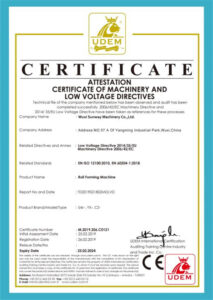
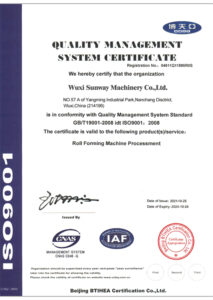
- ISO Standards for roll forming and safety: ISO 9001 (QMS), ISO 13849-1 (machine safety), ISO 6892-1 (tensile), ISO 25178 (surface) — https://www.iso.org
- OPC Foundation (OPC UA specs/connectivity) — https://opcfoundation.org
- NIST Manufacturing Portal (measurement and tolerancing guidance) — https://www.nist.gov
- World Steel Association (EPDs, low-CO2 steel insights) — https://worldsteel.org
- Cool Roof Rating Council and MCA technical manuals for building envelope profiles — https://coolroofs.org, https://www.metalconstruction.org
- The Fabricator Roll Forming Zone — process optimization articles — https://www.thefabricator.com
- Vision/measurement vendors (inline QC): Keyence — https://www.keyence.com, Cognex — https://www.cognex.com
- MES/OEE tools with machine connectors: Tulip, Ignition by Inductive Automation — https://tulip.co, https://inductiveautomation.com
कीवर्ड एकीकरण के उदाहरण:
- Steel roll forming machines with cassette tooling enable rapid profile changeovers for high-mix production.
- Adding AI vision to steel roll forming machines improves first-pass yield and reduces scrap.
- Procuring low-CO2 coils with EPDs enhances the sustainability profile of roll-formed steel components.
उद्धरण और अतिरिक्त पठन:
- US DOE AMO energy efficiency resources for metals manufacturing: https://energy.gov/amo
- World Steel Association on decarbonization and EPDs: https://worldsteel.org
- NIST measurement science for manufacturing: https://www.nist.gov
- The Fabricator — Roll forming process control: https://www.thefabricator.com
अंतिम अपडेट: 2025-10-24
परिवर्तन-लेख: Added 5 supplemental FAQs; 2025 industry trends with benchmark table; two recent case studies; expert viewpoints; curated tools/resources; integrated target keyword variations and authoritative references.
अगली समीक्षा तिथि और ट्रिगर: 2026-05-24 or earlier if OEMs release new cassette/preset systems, updated EPD/low-CO2 steel data becomes available, or standards (ISO/EN) impacting safety and tolerances are revised.