 अंग्रेज़ी
 स्पेनिश
 फ़्रेंच
 बंगाली
 रूसी
 अरबी
 तुर्की

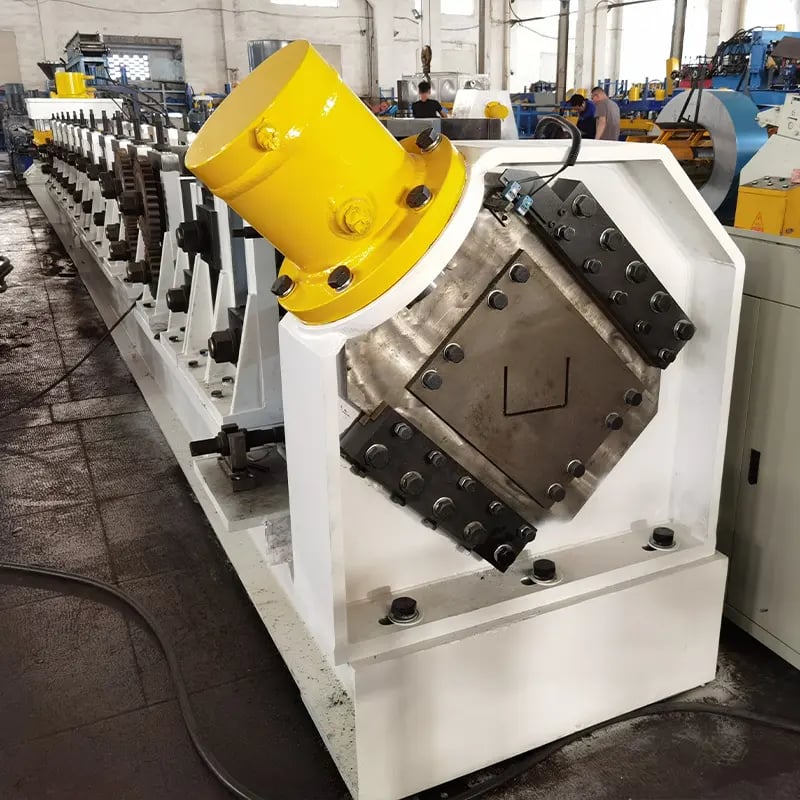
Roll forming is a metal forming process used to transform flat sheet metal or coils into customized profiles with complex cross-sections. रोल फॉर्मिंग मशीनें are essential equipment for manufacturing precision metal parts with repetitive profiles efficiently and economically. This guide provides a comprehensive overview of the key factors to consider when selecting the optimal roll former for your production needs.
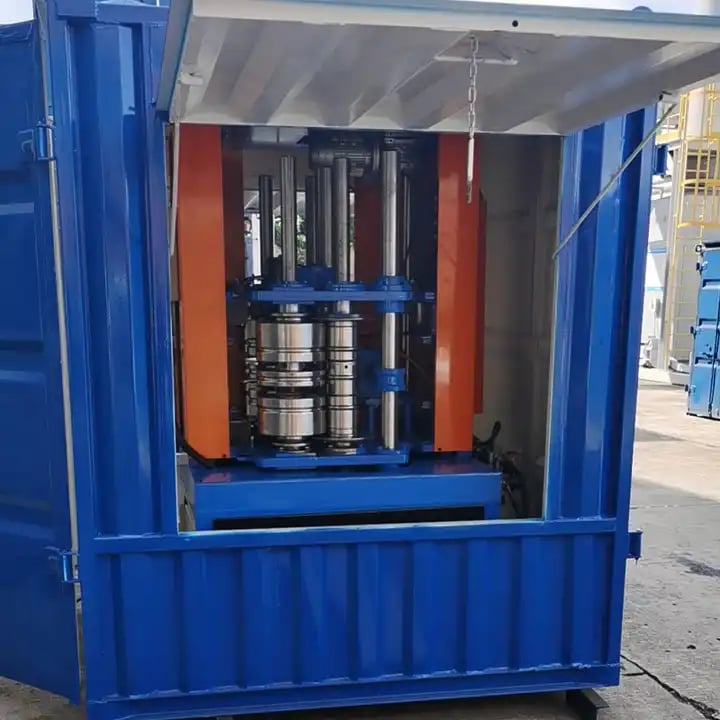
रोल फॉर्मिंग मशीनों का अवलोकन
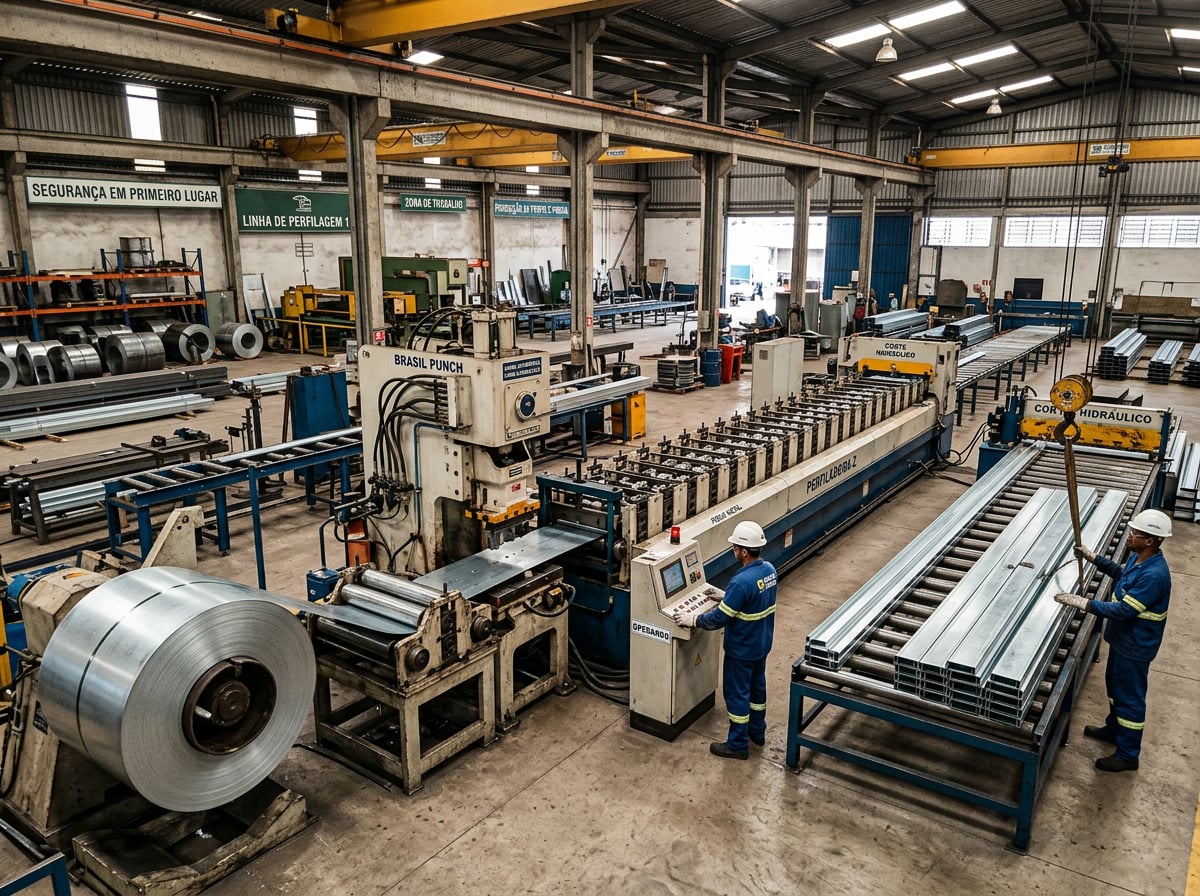
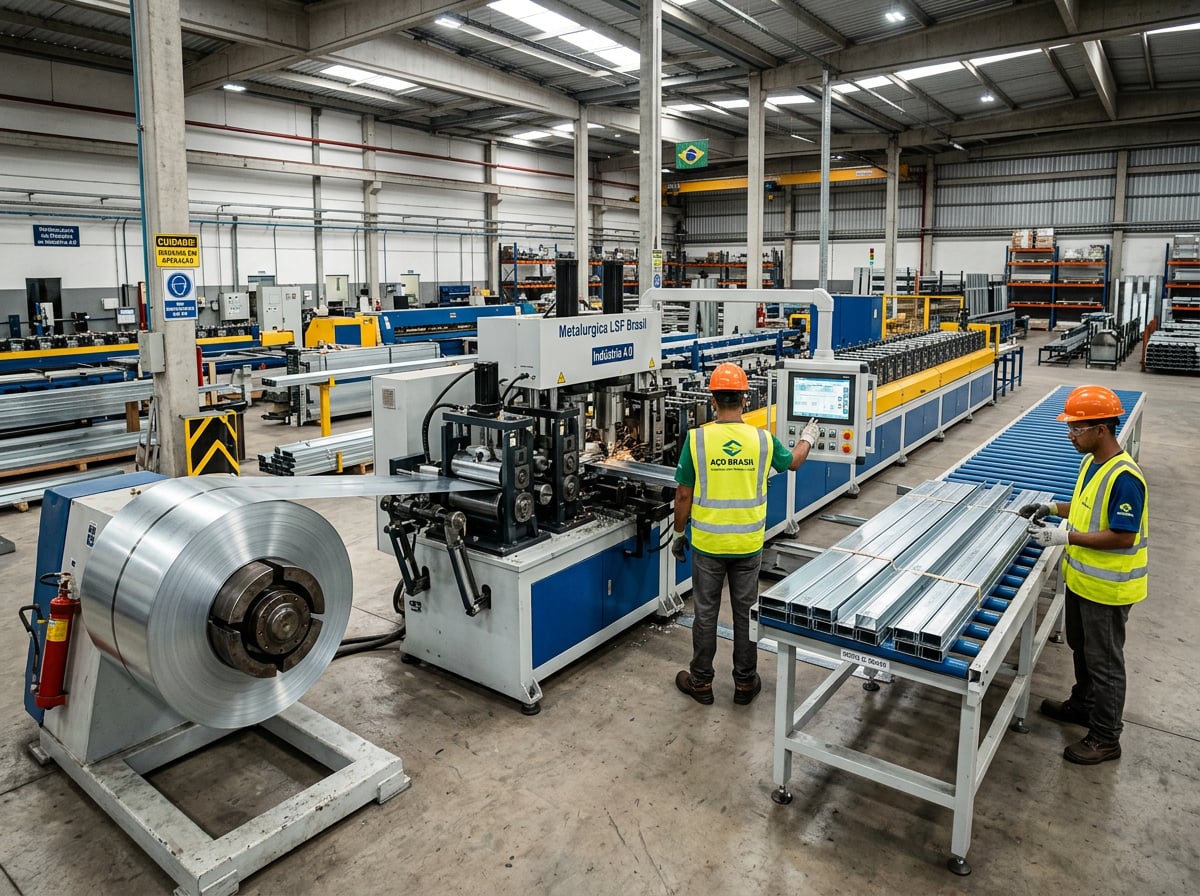
Roll forming machines use a series of consecutive pairs of contoured rolls to gradually shape metal sheet or strip into the desired cross-sectional profile. Each roll forming pass incrementally forms the material closer to the target shape.
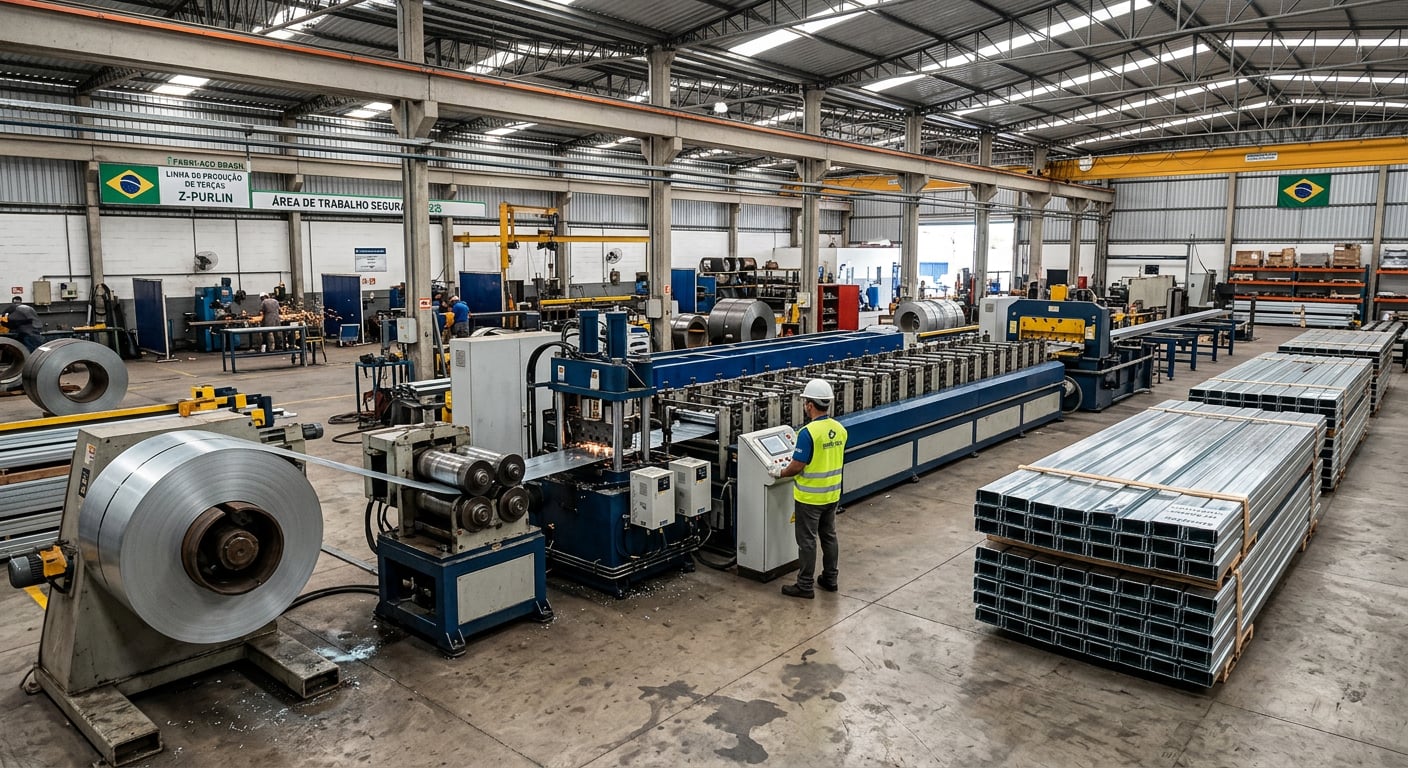
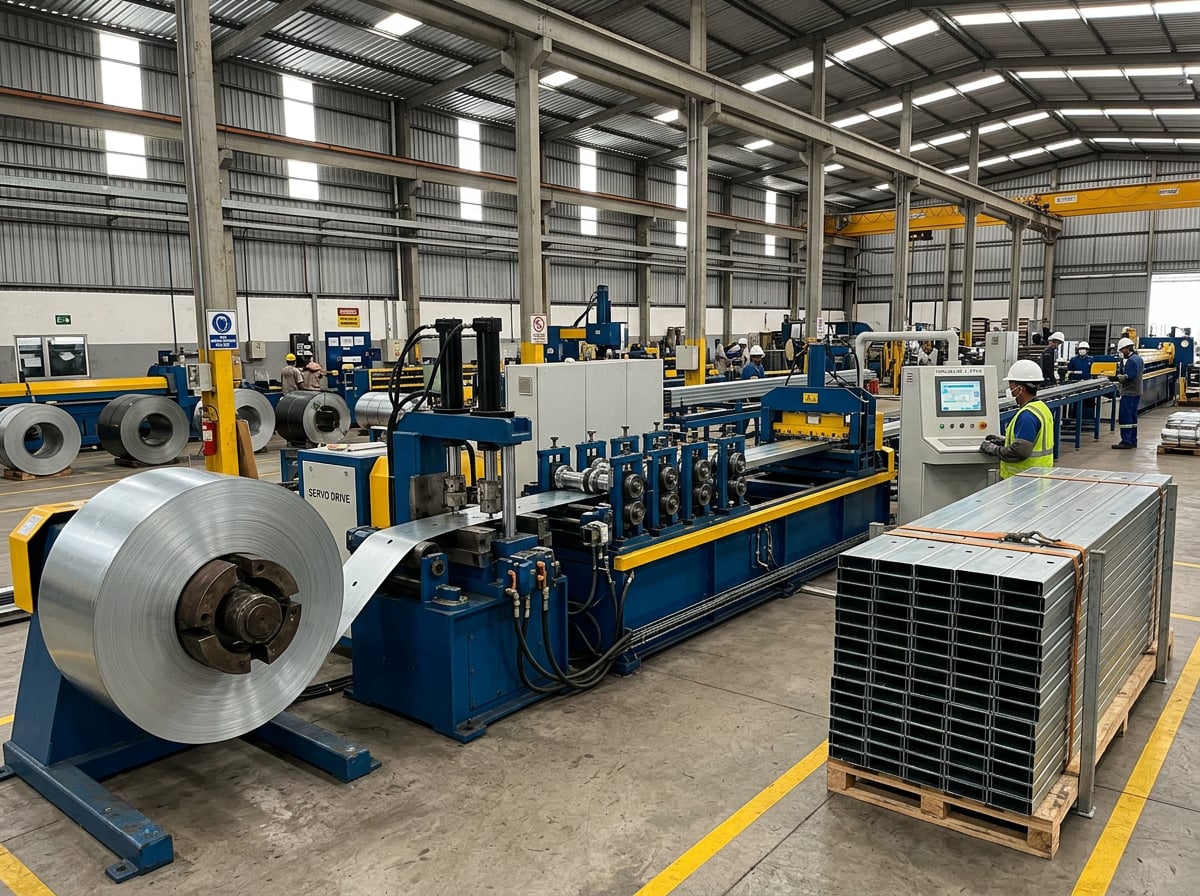
The main components of a basic roll former include:
- Uncoiler or decoiler to feed raw coil or sheet metal into the machine
- Feed table with pinch rolls to guide sheet through machine
- Forming stations with top and bottom rolls to progressively shape the profile
- Cutoff knife to cut finished parts to length
- Controls and sensors to set and monitor process parameters
Table 1: Types of Roll Forming Machines
| प्रकार | विवरण |
|---|---|
| Coil-to-coil | Continuous process, outputs formed coil |
| लंबाई के अनुसार कटिंग | Cuts formed profile to length after rolling |
| End formers | Form ends of profile with special rolls |
| पोर्टेबल | Compact units for on-site or short-run production |
| विशेषता | Custom machines for unique profiles |
Roll formers are available in different configurations and levels of automation. Key characteristics that vary by machine include:
- Number of roller stations – more stations allow more complex profiles.
- Roller size – determines maximum sheet width.
- Roller materials – steel, rubber, urethane coated etc.
- Inline processes – punching, welding, hardware insertion.
- Speed and precision – depends on mechanical design.
- Controls – basic vs. digital controls and monitoring.
- Automation features – coil handling, part cutoff and stacking.
Table 2: Roll Former Size Specifications
| पैरामीटर | सामान्य सीमा |
|---|---|
| स्टैंडों की संख्या | 10 – 26 |
| अधिकतम शीट चौड़ाई | 18 – 80 inches |
| न्यूनतम शीट मोटाई | 0.5 – 2 mm |
| अधिकतम शीट मोटाई | 3 – 8 mm |
| रोल व्यास | 4 – 8 inches |
The choice of machine depends on the profile shape, dimensions, materials, and production volume requirements. Work with roll former manufacturers to select the optimal configuration for your specific application.
रोल फॉर्मिंग मशीनों के अनुप्रयोग
Roll forming is suited for high productivity and efficient continuous production of metal parts with cross-sections that would be difficult to form with other processes.
Table 3: Roll Forming Applications
| उद्योग | उत्पादित सामान्य प्रोफ़ाइल |
|---|---|
| निर्माण | Studs, tracks, panels, decking, roofing, siding, drainage |
| ऑटोमोटिव | Door pillars, roof rails, windshield trim |
| उपकरण | Frames, housings, shelves, panels |
| फर्नीचर | Legs, frames, shelving, handles |
| लाइटिंग | Poles, frames |
| परिवहन | Rail car and truck frames, interiors |
Almost any open thin-walled shape can be roll formed as long as it can be decomposed into a series of simple cross-sectional stages. Hollow and enclosed tube profiles require specialized roll forming techniques.
Common materials roll formed include:
- कम कार्बन स्टील
- उच्च-शक्ति स्टील
- स्टेनलेस स्टील
- एल्यूमिनियम
- पीतल
- तांबा
रोल फॉर्मिंग के लाभ
Table 4: Advantages of Roll Forming
| लाभ | विवरण |
|---|---|
| उच्च उत्पादकता | Continuous process with fast cycle times |
| सामग्री की बचत | Efficient use of raw material with little waste |
| श्रम दक्षता | Automated process requires minimal operators |
| लचीलापन | प्रोफाइलों के बीच त्वरित चेंजओवर |
| मजबूती | Cold forming work hardens and strengthens metal |
| गुणवत्ता | Consistent and repeatable to tight tolerances |
| लागत प्रभावी | अन्य प्रक्रियाओं की तुलना में कम टूलिंग लागत |
| Design freedom | Complex shapes can be produced |
Key strengths of roll forming include high throughput, material utilization, and geometric flexibility for mass production of parts with sectional profiles.
रोल फॉर्मिंग मशीन संचालन
Proper setup and operation of roll formers is key to achieving quality outcomes. The main process steps include:
- Loading coils or de-stacking sheet onto the infeed table
- Threading the strip through the roller stations
- Setting the requred rotation speeds and pass schedules
- Monitoring forming process and inspecting output
- Cutting parts to specified lengths or coiling finished product
- Safety procedures for safe operator work environment
Table 5: Roll Former Operation Guidelines
| पैरामीटर | सिफारिशें |
|---|---|
| सामग्री फीड | Use proper decoiler tension; clean stock; lubricate as needed |
| रोलर समायोजन | Set roll gaps progressively per procedure |
| Roll setup | Check parallelism and proper rotation direction |
| गतियाँ | Start slow and incrementally increase; avoid slippage |
| Scrap | Allow multiple parts as scrap until process stabilizes |
| स्नेहन | Apply correct lubricant to reduce friction; avoid over oiling |
| रखरखाव | Follow schedule for roll and bearing inspection and lubrication |
| टूलिंग का घिसाव | Monitor roll condition and replace timely |
| सुरक्षा | Use proper guarding; ear and eye protection |
Taking time to properly set up and trial the roll former will ensure optimal performance and output quality.
रोल फॉर्मिंग मशीन रखरखाव
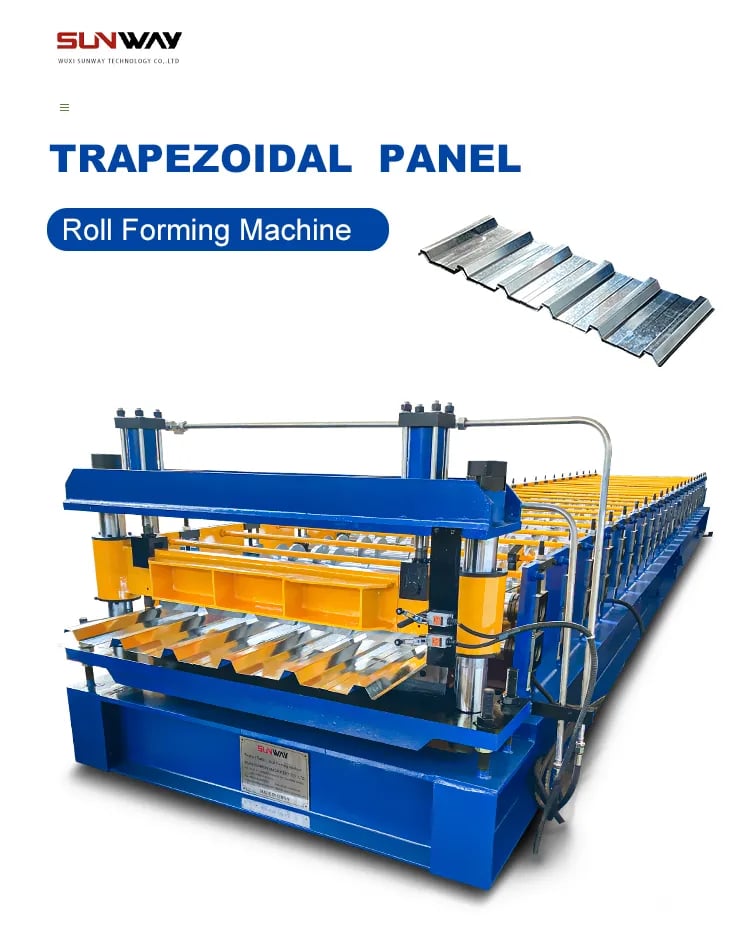
A sound maintenance program is essential for trouble-free operation and maximum longevity of roll forming equipment.
Table 6: Roll Former Maintenance Schedule
| रखरखाव कार्य | आवृत्ति |
|---|---|
| रोल की स्थिति का निरीक्षण करें | दैनिक |
| संरेखण जांचें | मासिक |
| बेयरिंग को चिकनाई दें | Per OEM schedule |
| Lubricate guides | साप्ताहिक |
| Inspect chains and sprockets | मासिक |
| Verify hydraulic pressure | मासिक |
| Inspect sensors and controls | वार्षिक |
| Roll refinishing or replacement | आवश्यकतानुसार |
Common problems caused by poor maintenance include profile distortion, excessive noise, roll marking, and increased scrap rates. Proactive maintenance prevents unplanned downtime and quality issues.
रोल फॉर्मिंग मशीन निर्माता का चयन
Selecting the right roll former supplier is key to getting a machine that matches your needs. Below are important factors to consider:
Table 7: Roll Former Supplier Evaluation Criteria
| विचार | Assessment Guidelines |
|---|---|
| प्रतिष्ठा | Years in business; customer reviews |
| अनुकूलन | Ability to engineer for custom profiles |
| गुणवत्ता | Process control and tolerances; certifications |
| डिज़ाइन विशेषज्ञता | समान अनुप्रयोगों का अनुभव |
| लागत | Pricing for features; total cost of ownership |
| लीड टाइम | Standard and expedited schedule options |
| सहायता | Installation assistance; training; manuals |
| रखरखाव | Ease of service; spare parts availability |
| Upgradeability | Ability to add functionality later |
Work closely with shortlisted suppliers to review designs and capabilities. Get references to contact their existing customers. Select the roll former company that best fits your business.
रोल फॉर्मर मूल्य निर्धारण
The total cost of a roll forming system includes the base machine cost plus additional accessories and tooling.
Table 8: Roll Forming Equipment Pricing
| घटक | मूल्य सीमा |
|---|---|
| Basic machine | $50,000 – $500,000 |
| Inline punches | $10,000 – $100,000 |
| द्वितीयक प्रक्रियाएँ | $25,000 – $250,000 |
| स्वचालन | $25,000 – $250,000 |
| Tooling – rolls per station | $1,000 – $5,000 |
| डिज़ाइन और इंजीनियरिंग | $5,000 – $50,000 |
| स्थापना और प्रशिक्षण | $10,000 – $100,000 |
Pricing varies significantly based on the machine size, features, precision, and production volumes. Get quotes from several suppliers to compare options. Consider total cost against productivity benefits.
रोल फॉर्मिंग बनाम अन्य धातु निर्माण प्रक्रियाएँ
Table 9: Comparison of Metal Forming Processes
| रोल फॉर्मिंग | प्रेस ब्रेक बेंडिंग | स्टैम्पिंग | एक्सट्रूज़न | |
|---|---|---|---|---|
| सेटअप समय | कम | उच्च | बहुत उच्च | मध्यम |
| टूलिंग लागत | कम | मध्यम | बहुत उच्च | उच्च |
| Geometric flexibility | उच्च | मध्यम | कम | मध्यम |
| भाग की लंबाई | निरंतर | बैच | बैच | निरंतर |
| मजबूती | उच्च | मध्यम | उच्च | मध्यम |
| सहनशीलताएँ | +/- 0.5mm | +/- 1mm | +/- 0.5mm | +/- 1mm |
| उत्पादकता | बहुत उच्च | मध्यम | उच्च | उच्च |
| लागत प्रभावशीलता | High – medium volumes | Low volumes | उच्च मात्रा | उच्च मात्रा |
Roll forming is advantageous for medium to high production volumes of parts with length or complex shapes, compared to other processes like stamping that have higher setup costs.
रोल फॉर्मिंग मशीन की सीमाएँ
Despite the benefits, roll forming does have some inherent limitations to consider:
- Not efficient for low volume production.
- Limited to simple cross-sections.
- Size limited by roller dimensions.
- Sequential nature makes some shapes challenging.
- Secondary operations often required.
- Significant tooling investment for design changes.
Complexity of the profile and total length of the machine are key factors impacting cost.
निष्कर्ष
Specifying the optimal roll forming machine is essential to achieve maximum productivity, efficiency, and quality for producing metal parts with sectional profiles. This guide covers the key factors such as machine capabilities, features, operations, maintenance, suppliers, costs, and tradeoffs to help select the best roll former for your manufacturing needs. Leveraging the flexibility of the roll forming process can provide significant benefits over alternate metal forming approaches for producing repetitive sectional parts to meet your product requirements.
अक्सर पूछे जाने वाले प्रश्न
प्रश्न: धातु शीट की कितनी मोटाई को रोल फॉर्म किया जा सकता है?
A: Standard roll formers can typically process metal sheets between 0.5mm to 8mm thickness. The maximum thickness depends on the roller size and power. Thinner gauges down to 0.3mm can be formed with proper machine adjustments.
Q: What shapes can be roll formed?
A: Any open cross-sectional shape is possible, such as C, U, Z, tubular, and hat channel profiles. Closed tube shapes require special roll forming methods. The more complex the profile, the more roller stations are required.
Q: How long can a part be roll formed?
A: There is no theoretical limit to the length as it is a continuous process. Practical lengths range from a few inches to hundreds of feet depending on the machine and application. Extended runout tables allow supporting longer parts.
Q: How accurate is roll forming?
A: Dimensional tolerances within +/- 0.5mm are standard based on machine precision and process controls. Tolerances down to +/- 0.25mm are possible but require tight monitoring and calibration.
Q: How does roll forming affect material properties?
A: The cold working strengthens the metal by work hardening. Yield and ultimate tensile strength increase. Elongation percentages decrease. Annealing can recover ductility.
Q: What defects can occur in roll forming?
A: Common defects are twist, bow, curl, wrinkles, and marking. These are prevented with proper design, machining, roll setup, and operation. Edge waviness can result from excessive roll pressures.
Q: How long do roll forming machines last?
A: With proper use and preventative maintenance, service lifetimes of over 20 years are common. Roll replacement and upgrades to controls or automation can extend useful production life further.
प्र: कौन से सुरक्षा उपाय आवश्यक हैं?
A: Roll formers contain many pinch points. Machine guarding, interlocked barriers, E-stops, and lockouts are essential. Workers also need PPE such as close-fitting clothing, ear protection, safety glasses, and gloves.
Q: How much does roll forming cost?
A: Total cost depends on size and features. Small manual machines may cost ~$75,000. Large fully automated high-speed production lines can cost over $500,000. Get quotes based on your part design and volumes.
रोल फॉर्मिंग के बारे में अधिक जानें
अक्सर पूछे जाने वाले प्रश्न (पूरक)
1) How do I size motor power for a roll forming machine?
- Estimate with P ≈ (k × t × w × S × v), where t = thickness, w = strip width, S = material strength factor, v = speed, k = process constant (accounts for stands and friction). Vendors refine via torque/speed curves; add 20–30% service factor for peak loads and startup.
2) What changeover strategy minimizes downtime between profiles?
- Use cassette-style roll sets with quick-release entry guides, digital stand position presets, and recipe-based PLC setups. Aim for sub-30-minute changeovers with color-coding of shims and staged tooling carts.
3) Which control features most impact quality on complex profiles?
- Closed-loop encoders for cut-to-length, load cells on decoiler tension, servo-driven stands, and inline laser/vision measurement for pitch/depth. Add SPC at the HMI to trend twist, bow, and springback.
4) When should I choose coil-to-coil vs. cut-to-length lines?
- Coil-to-coil suits downstream slitting/embossing or when shipping coiled profiles. Cut-to-length is preferred when shipping finished parts, integrating stacking/packing, or when downstream space is constrained.
5) How can I reduce scrap during startup and material changes?
- Standardize warm-up routines, run sacrificial leader strips, lock feed/tension recipes per coil grade, and use first-article checks with go/no-go gauges. Target <2% startup scrap through checklists and laser length verification.
रोल फॉर्मिंग मशीनों के लिए 2025 उद्योग रुझान
- Servo-electrification and energy recovery: Regenerative drives reduce energy per meter by 8–15% compared with legacy VFD-only systems.
- Faster tool change: Cassette and tool-less concepts push typical changeovers from 60–120 minutes to 15–45 minutes, enabling economical short runs.
- Inline QA mainstreaming: Laser triangulation and vision systems detect pitch, flange height, and cut-length deviations in real time; first-pass yield climbs to 96–98%.
- Advanced materials: Growth in AHSS (590–980 MPa) and pre-painted aluminum for façade systems requires stiffer frames, larger roll diameters, and coated rolls to prevent marring.
- Digital twins and predictive maintenance: OEMs supply machine twins connected to IIoT platforms; bearing vibration and roll wear are predicted, not just inspected on schedule.
- Safety and compliance: CE/UL Cat-4 safety circuits, interlocked guards, and light curtains now baseline on export models.
- Sustainability: Buyers request Environmental Product Declarations (EPDs) and ISO 50001-aligned operations; recycled-content steel ≥30% is increasingly specified.
2025 बेंचमार्क और अपनाने के मेट्रिक्स
| मीट्रिक | २०२३ सामान्य | 2025 का सामान्य | नोट्स/स्रोत |
|---|---|---|---|
| Line speed (general profiles) | 15–25 m/min | 18–32 m/min | OEM catalogs; field audits |
| Changeover time (cassette systems) | 60–120 min | 15–45 मिनट | Vendor case studies |
| प्रथम-पास उपज (FPY) | 92–95% | 96–98% | इनलाइन लेज़र QA + SPC |
| Energy per meter (0.8–1.2 mm steel) | 0.25–0.35 kWh/m | 0.20–0.30 kWh/m | With regen drives |
| AHSS capability share of new installs | ~18% | 28–35% | Automotive/construction |
| इनलाइन QA अपनाना | ~25% | 50–60% | विज़न/लेज़र मेट्रोलॉजी |
| Predictive maintenance deployment | <10% | 25–35% | IIoT condition monitoring |
चयनित संदर्भ:
- World Steel Association technology and efficiency reports: https://worldsteel.org
- SME (Society of Manufacturing Engineers) roll forming technical briefs: https://www.sme.org
- NIST Smart Manufacturing papers: https://www.nist.gov
- Manufacturer technical notes (Formtek, Samco, Gasparini)
नवीनतम अनुसंधान मामले
Case Study 1: Digital Twin-Driven Setup Optimization (2025)
Background: North American appliance OEM faced long setup times and 5.4% scrap when switching between shelf and frame profiles on a multipass roll forming machine.
Solution: Implemented a machine digital twin with simulated pass schedules, added servo stand position presets, and inline laser gauges for flange height and length.
Results: Changeover time cut from 85 to 27 minutes; FPY improved from 94.1% to 97.8%; energy per meter reduced by 12% due to optimized ramp profiles.
Case Study 2: Forming AHSS 780 MPa With Surface-Sensitive Coils (2024)
Background: Tier-1 auto supplier needed to roll form 780 MPa galvanized AHSS roof rails without coating damage at 22 m/min.
Solution: Upgraded to larger-diameter, hard-chrome rolls with urethane entry guides, added closed-loop decoiler tension, and revised pass progression to reduce edge strain.
Results: Achieved 20–24 m/min with <1.5% scrap; eliminated edge micro-cracking; coating gloss retained within ±3 GU versus baseline.
विशेषज्ञों की राय
- Dr. Antonio Pérez, Head of Forming Processes, Fraunhofer IWU
Viewpoint: “For 2025, the highest ROI comes from integrating inline metrology with adaptive control. Speed alone no longer wins; controlled variability does.” - Sarah Kim, VP Engineering, Samco Machinery
Viewpoint: “Cassette tooling and servo stand automation are transforming small-batch economics. Shops that consistently hit sub-30-minute changeovers can profit from mass customization.” - Prof. Mei Chen, Materials Engineering, Tsinghua University
Viewpoint: “As AHSS adoption grows, pass design must limit edge strain and control springback. Roll coatings and precise tension management are as critical as stand stiffness.”
व्यावहारिक उपकरण और संसाधन
- Roll Forming Handbook (George T. Halmos) for pass design fundamentals
- World Steel Association—material and forming guidelines: https://worldsteel.org
- NIST MEP—OEE and SPC templates for process improvement: https://www.nist.gov/mep
- SAE & ISO standards for materials and measurement (e.g., ISO 6892-1): https://www.iso.org
- OSHA/CE machine safety resources: https://www.osha.gov और https://ec.europa.eu/growth/single-market/european-standards
- Free SPC calculators and control chart templates: https://www.isixsigma.com और https://www.spcforexcel.com
- Vendor application notes (Formtek, Gasparini, Samco) for setup, tooling, and maintenance best practices
Note: When requesting quotes for a roll forming machine, ask for energy-per-meter and FPY at your specific profile, thickness, and line speed, and require witnessed factory acceptance tests with inline QA data.
अंतिम अपडेट: 2025-10-24
परिवर्तन-लेख: Added 5 supplemental FAQs, 2025 trends with benchmark table, two recent case studies, expert opinions, and curated tools/resources with authoritative links.
अगली समीक्षा तिथि और ट्रिगर: 2026-04-30 or earlier if new inline QA adoption data, AHSS forming guidelines, or energy-per-meter benchmarks are published by OEMs/standards bodies.