Introduction
Standing seam roofs are a popular choice for residential and commercial buildings due to their durability and aesthetic appeal. These roofs consist of interlocking metal panels that provide excellent weather resistance and longevity. The process of manufacturing standing seam roof panels involves the use of specialized machinery known as standing seam roof panel roll forming machines. In this article, we will explore the various aspects of standing seam roof panel roll forming machines, including their types, benefits, working mechanism, and factors to consider when choosing one.
Understanding Standing Seam Roof Panel Roll Forming Machine
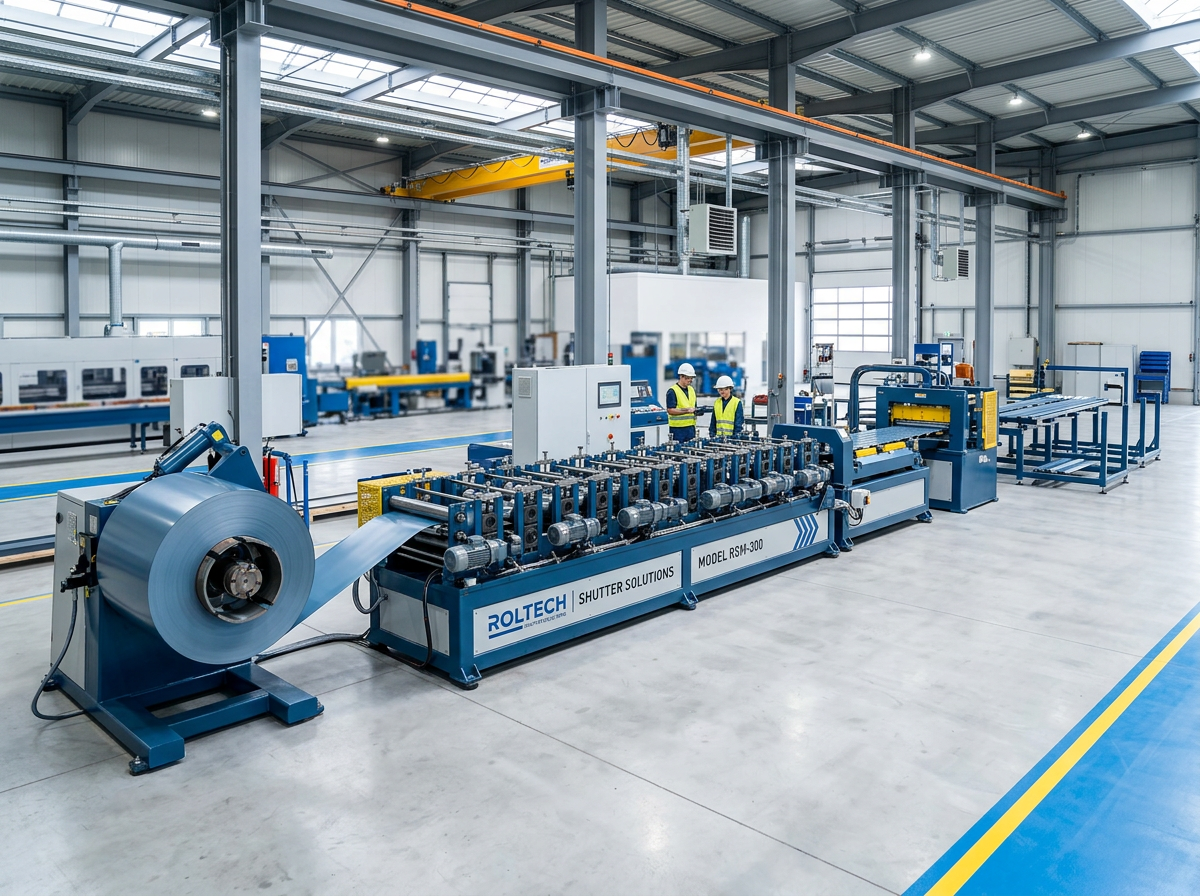
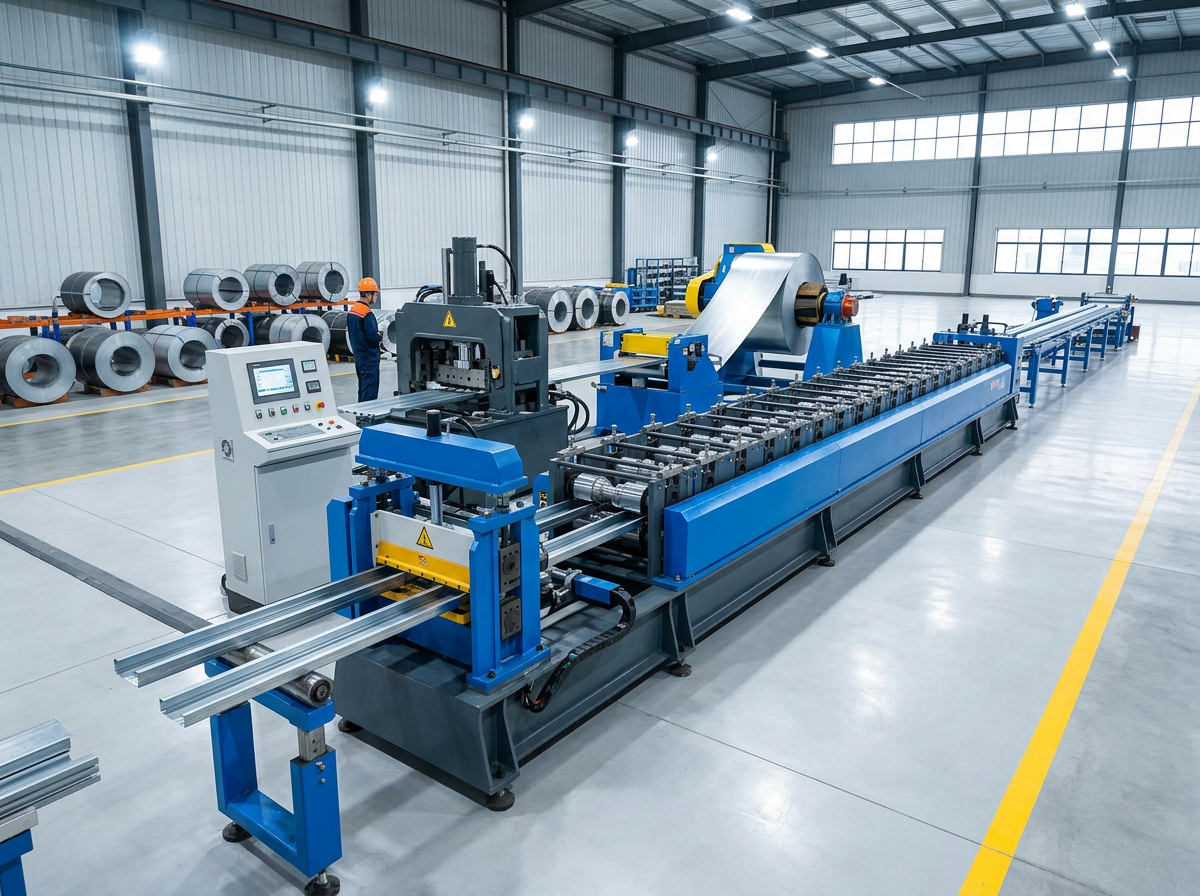
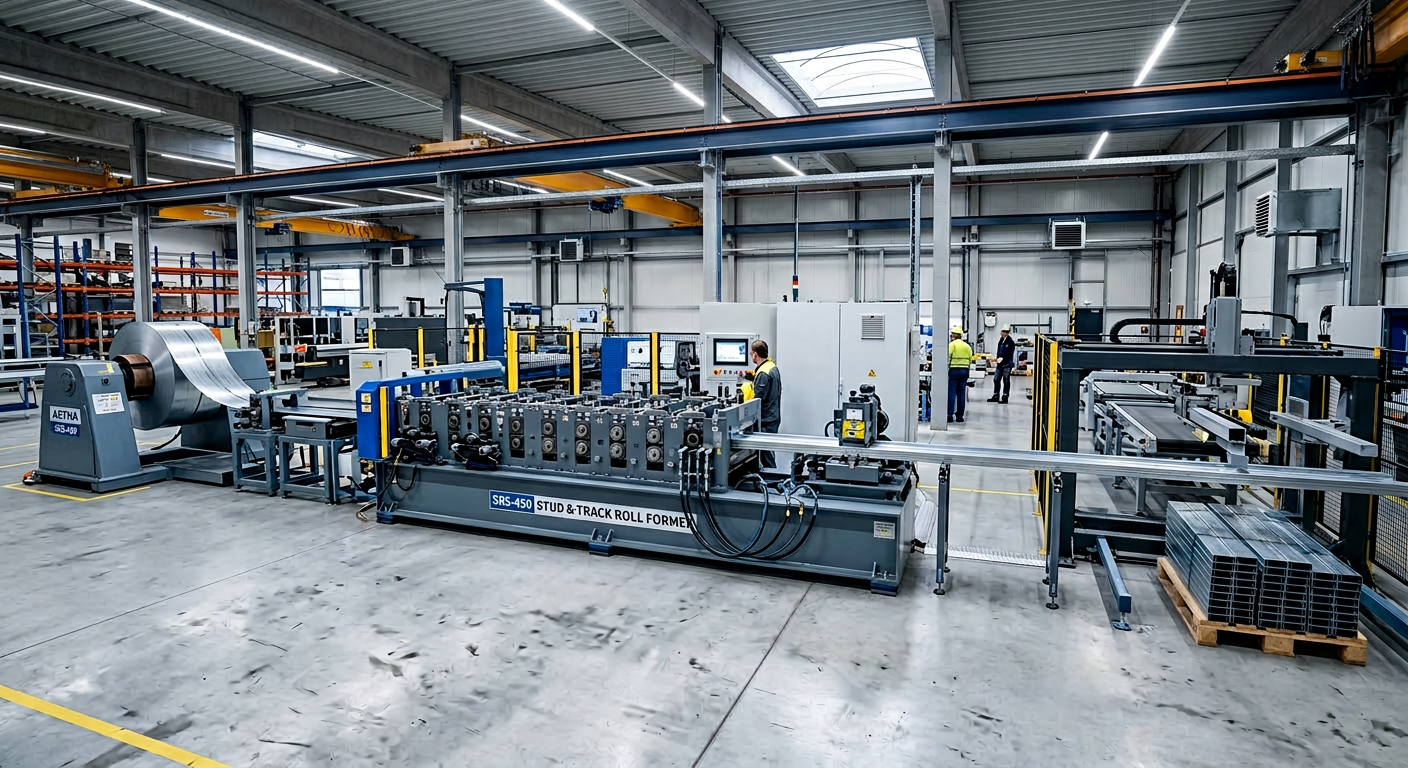
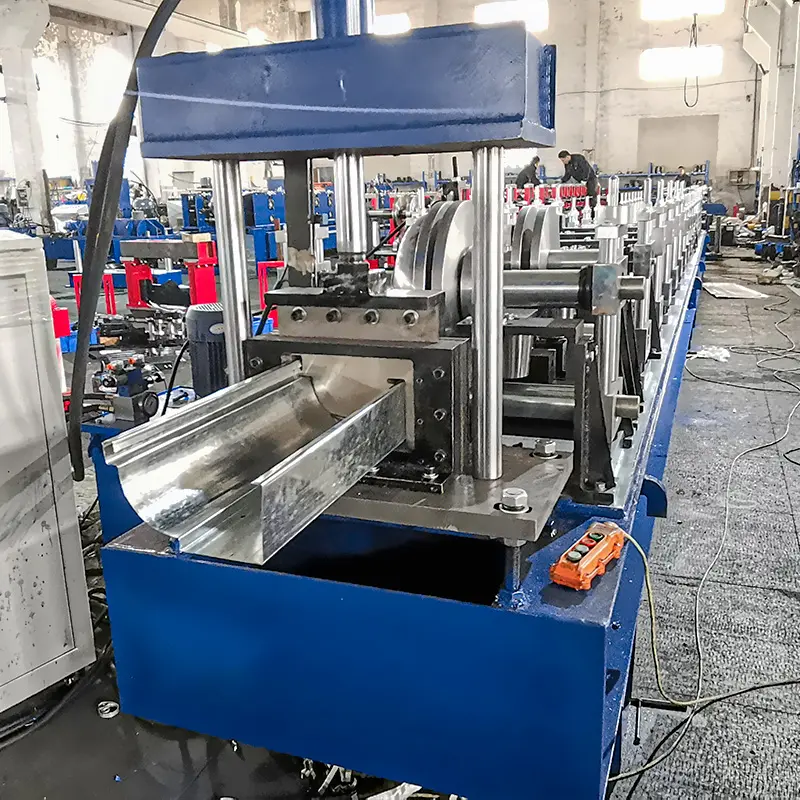
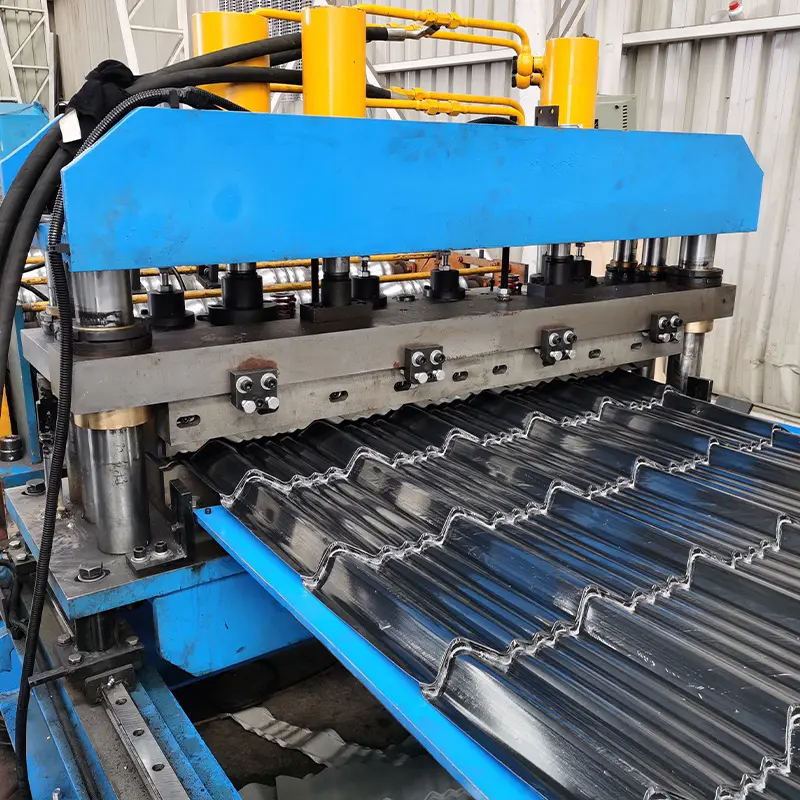
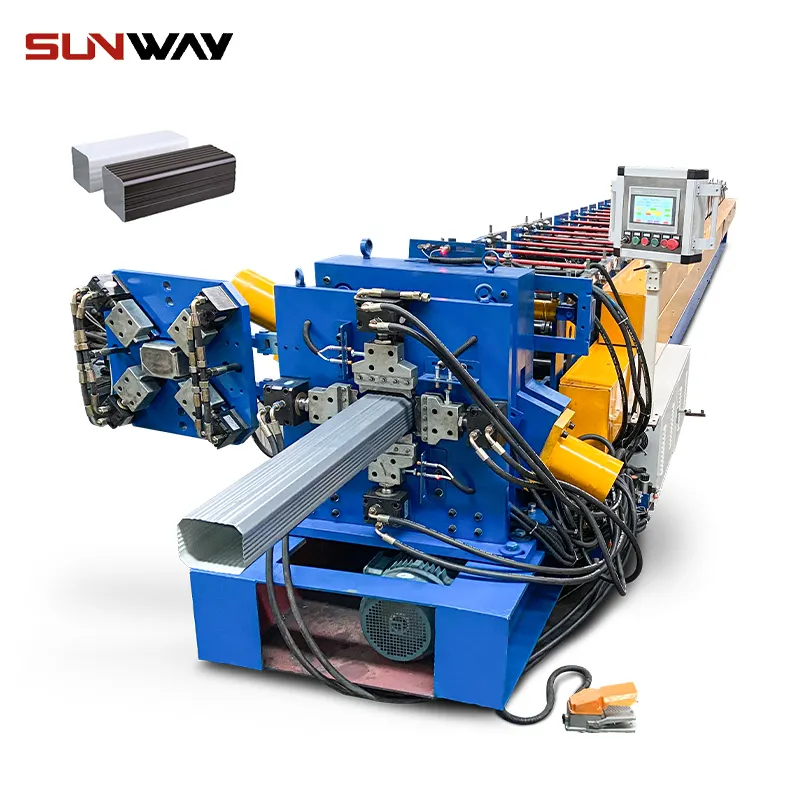
A standing seam roof panel roll forming machine is a specialized equipment designed to fabricate standing seam roof panels from metal coils. It utilizes a continuous process where the metal coil is fed into the machine, and the roll forming process transforms it into a finished standing seam roof panel. The machine consists of multiple rollers and cutting tools that shape and cut the metal as it passes through the machine.
Benefits of Standing Seam Roof Panel Roll Forming Machine
Using a standing seam roof panel roll forming machine offers several advantages, including:
- Cost-effective production: Roll forming machines can produce standing seam roof panels at a high speed, reducing labor costs and increasing production efficiency.
- Customization options: These machines allow for easy customization of panel dimensions, profiles, and other design elements to meet specific project requirements.
- Consistent quality: The roll forming process ensures uniformity in panel dimensions and profiles, resulting in high-quality and precise roof panels.
- Time-saving: Roll forming machines can produce standing seam roof panels rapidly, enabling faster project completion times.
- Versatility: Standing seam roof panel roll forming machines can handle a wide range of metal materials, including steel, aluminum, and copper.
- Longevity: The roof panels produced by these machines are known for their durability and resistance to weather elements, ensuring long-term performance.
Types of Standing Seam Roof Panel Roll Forming Machines
There are several types of standing seam roof panel roll forming machines available in the market. The most common ones include:
Single Profile Standing Seam Roof Panel Roll Forming Machine
A single profile standing seam roof panel roll forming machine is designed to produce roof panels with a single profile, typically with a standing seam. This type of machine is suitable for projects where a consistent profile is required throughout.
Double Profile Standing Seam Roof Panel Roll Forming Machine
A double profile standing seam roof panel roll forming machine can produce roof panels with two different profiles, allowing for more design flexibility. This type of machine is ideal for projects that require alternating profiles or a combination of different profiles.
Snap Lock Standing Seam Roof Panel Roll Forming Machine
A snap lock standing seam roof panel roll forming machine is specifically designed to create snap lock standing seam panels. These panels have a unique interlocking mechanism that eliminates the need for separate clips or fasteners, making installation faster and more efficient.
Key Features of Standing Seam Roof Panel Roll Forming Machine
When choosing a standing seam roof panel roll forming machine, it is essential to consider its key features, such as:
- Material compatibility
- Production speed
- Customization options
- Durability and reliability
- Ease of operation
- Safety features
- Maintenance requirements
Working Mechanism of Standing Seam Roof Panel Roll Forming Machine
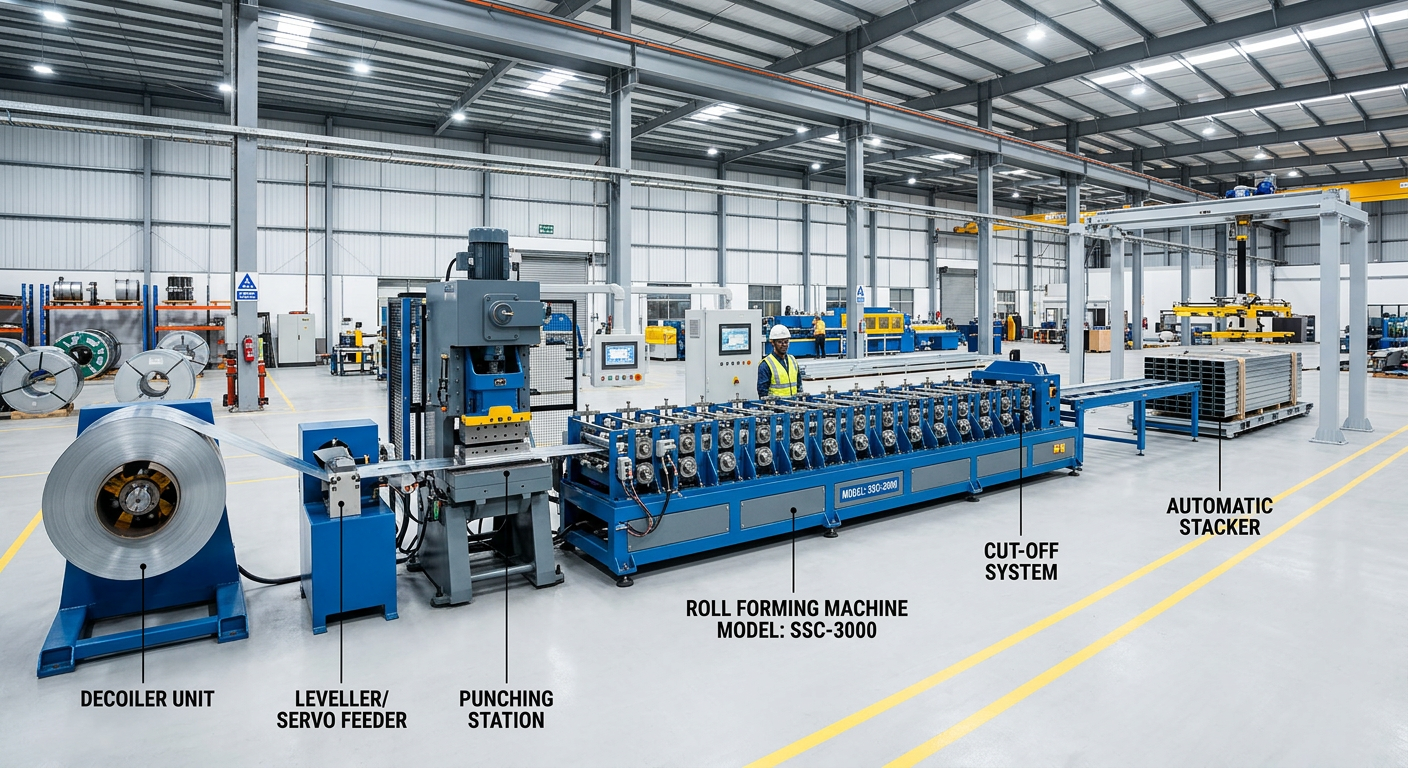
The working mechanism of a standing seam roof panel roll forming machine involves several steps:
- Coil feeding: The metal coil is fed into the machine using a decoiler, which holds and controls the release of the coil.
- Material shaping: The coil passes through a series of rollers that gradually shape it into the desired profile, including the standing seam.
- Cutting and shearing: Once the panel reaches the desired length, cutting and shearing tools trim it to the required dimensions.
- Stacking and packaging: The finished panels are stacked and packaged for easy transportation and storage.
Factors to Consider when Choosing a Standing Seam Roof Panel Roll Forming Machine
When selecting a standing seam roof panel roll forming machine, it is crucial to consider the following factors:
Material Compatibility
Ensure that the machine can handle the specific metal materials required for your project, such as steel, aluminum, or copper.
Production Speed
Consider the production speed of the machine to meet project deadlines and optimize efficiency.
Customization Options
Choose a machine that offers flexibility in profile dimensions, panel width, and other design elements to accommodate various project requirements.
Durability and Reliability
Select a machine made of high-quality materials and components to ensure long-term durability and reliable performance.
Maintenance and Care for Standing Seam Roof Panel Roll Forming Machine
To maintain the optimal performance of a standing seam roof panel roll forming machine, regular maintenance and care are necessary. Some key maintenance practices include:
- Regular cleaning of the machine to remove debris and prevent build-up.
- Lubrication of moving parts to minimize friction and wear.
- Inspection and replacement of worn-out or damaged components.
- Calibration of the machine to ensure accurate panel dimensions and profiles.
Conclusion
Standing seam roof panel roll forming machines play a vital role in the efficient production of standing seam roof panels. These machines offer numerous benefits, including cost-effectiveness, customization options, and consistent quality. By understanding the various types, key features, working mechanism, and maintenance requirements of these machines, you can make an informed decision when selecting the most suitable one for your project.
Frequently Asked Questions (FAQs)
1. How long does it take to produce standing seam roof panels using a roll forming machine?
The production time depends on factors such as the machine’s speed, panel dimensions, and complexity. However, roll forming machines can typically produce standing seam roof panels at a rapid pace, significantly reducing production time compared to other methods.
2. Can a standing seam roof panel roll forming machine handle different metal materials?
Yes, most standing seam roof panel roll forming machines are designed to handle various metal materials, including steel, aluminum,copper, and more. It is important to ensure that the machine you choose is compatible with the specific metal material required for your project.
3. Are standing seam roof panels produced by roll forming machines durable?
Yes, standing seam roof panels manufactured using roll forming machines are known for their durability. These panels are designed to withstand harsh weather conditions, provide excellent protection against moisture, and have a long lifespan.
4. Can roll forming machines create different profiles for standing seam roof panels?
Yes, roll forming machines can produce a variety of profiles for standing seam roof panels. Whether you require a single profile, double profile, or snap lock profile, there are machines available that can cater to your specific design needs.
5. How often should a standing seam roof panel roll forming machine be maintained?
Regular maintenance is crucial to keep the roll forming machine in optimal condition. It is recommended to follow the manufacturer’s guidelines regarding maintenance schedules. Typically, routine cleaning, lubrication, inspection, and calibration should be performed periodically to ensure smooth operation and prolong the machine’s lifespan.
Frequently Asked Questions (FAQ)
1) What seam types can standing seam roof panel roll forming machines produce?
- Common seams include snap-lock, mechanically seamed (single and double-lock, 90°/180°), and nail/fastener flange variants. Choice affects wind uplift ratings, watertightness, and installation speed.
2) How do coil properties impact panel performance and appearance?
- Yield strength, thickness (0.4–0.9 mm typical), temper, and coating system (PVDF, SMP, Al-Zn, Zn-Al-Mg) influence seam integrity, oil-canning, and corrosion resistance. Tighter flatness and low coil crown reduce waviness on wide pans.
3) What determines maximum line speed for standing seam panel machines?
- Profile complexity, material thickness/grade, inline ribbing/striation, pre-notching/punching, and cutoff type. In 2025, single-skin panel lines typically run 35–70 m/min; complex architectural profiles with micro-ribs run 20–45 m/min.
4) How can I minimize oil-canning on wide-pan standing seam panels?
- Use tension-leveled or skin-passed coils, add micro-ribs/striations, ensure balanced roll flower design, control entry tension, and specify appropriate substrate thickness. Inline vision/laser flatness control helps detect issues early.
5) Which standards should I reference for code compliance and testing?
- Wind uplift and air/water: ASTM E1592, E1680/E1646; hail/impact: UL 2218; fire and assemblies: UL 790/ASTM E108, NFPA 285 (for walls/assemblies); product materials: ASTM A653/A792, EN 10346; machine safety: ISO 12100, ISO 13849-1, IEC 60204-1.
2025 Industry Trends for Standing Seam Roof Panel Roll Forming Machines
- Closed-loop QC: Inline vision and laser sensors auto-correct rib height, seam engagement, and pan width, cutting first-article scrap to ~1–2%.
- Faster, recipe-driven changeovers: Servo stand positioning and tool referencing reduce profile changeovers to 6–12 minutes, improving OEE on mixed architectural runs.
- Sustainability push: Broader adoption of Zn-Al-Mg and high-recycled-content coils; energy-optimized drives lower kWh/ton by 10–20%.
- BIM-linked traceability: Datamatrix/QR panel IDs mapped to coil heat, coating, and panel geometry to streamline installation and warranty tracking.
- Safety by design: Performance Level d (PL d) architectures, interlocked guards, and light curtains standard on premium stackers and flying shears.
Benchmarks and KPIs (2025)
| मुख्य प्रदर्शन संकेतक | २०२३ सामान्य | 2025 सर्वश्रेष्ठ-इन-क्लास | Enablers/Notes | स्रोत |
|---|---|---|---|---|
| Line speed (single-skin standing seam) | 25–45 मी/मिनट | 50–70 मी/मिनट | Low-inertia stands, servo flying shear | FMA; The Fabricator |
| Changeover time (profile recipe) | 20–45 min | 6–12 min | Servo stand positioning, HMI recipes | OEM datasheets |
| First-article scrap | 3–6% | 1–21टीपी3टी | Inline vision + digital pass design | data M; UBECO |
| ऊर्जा तीव्रता (kWh/टन) | 95–130 | 75–100 | VFDs, regen drives, smart idle | U.S. DOE AMO |
| Oil-canning warranty claims (architectural) | 1.2–1.8% of jobs | 0.5–0.9% | Micro-ribs + flatness control | MCA; industry surveys |
Authoritative references:
- ASTM/UL roof standards: https://www.astm.org and https://www.ul.com
- FMA Roll Forming: https://www.fmamfg.org
- The Fabricator (roll forming): https://www.thefabricator.com
- U.S. DOE AMO benchmarks: https://www.energy.gov/eere/amo/advanced-manufacturing
- Metal Construction Association (MCA): https://www.metalconstruction.org
- AISI/CFSEI resources: https://www.buildusingsteel.org
नवीनतम अनुसंधान मामले
Case Study 1: Closed-Loop Vision Boosts Architectural Seam Accuracy (2025)
- Background: A roofing fabricator producing snap-lock and double-lock panels for coastal resorts faced seam engagement variability and oil-canning complaints.
- Solution: Integrated inline laser pan-width and rib-height measurement with automatic stand adjustment; added micro-rib module and upgraded 7-roll precision leveler; implemented QR panel traceability.
- Results: Seam engagement variation reduced 48%; first-article scrap 4.6% → 1.8%; oil-canning complaints down 41% YoY; average install time per square reduced 9% due to traceable panel mapping.
Case Study 2: Energy-Optimized Line for High-Wind Regions (2024)
- Background: Manufacturer targeting ASTM E1592 high uplift ratings needed consistent seams on 0.7–0.9 mm AZ50 coils and lower operating costs.
- Solution: Retrofitted regen drives, smart idle, and servo flying shear; revised flower design for thicker gauges; added inline seam crimp verification camera for QA.
- Results: Energy intensity -17% (to 82 kWh/ton); pass rate on E1592 mock-ups 92% → 99%; throughput +22% at 0.7 mm with no seam splits reported across 6-month pilot.
विशेषज्ञों की राय
- Dr. Mark Sheppard, Senior Research Engineer, Oak Ridge National Laboratory
- Viewpoint: “On standing seam roofs, profile geometry and controlled residual stress are key. Inline flatness and seam engagement measurement deliver repeatable E1592 performance without slowing production.”
- Source: https://www.ornl.gov
- Linda Zhao, Director of Automation, data M (COPRA RF)
- Viewpoint: “Digital flower design tied to servo stand positioning is mainstream; the competitive edge now is real-time vision feedback to punches and cutoff for ±0.5 mm pan width.”
- Source: https://www.datam.de/en/copra
- Todd Miller, President, Isaiah Industries (metal roofing)
- Viewpoint: “To reduce oil-canning and call-backs, specify tension-leveled coils and micro-striations, and educate installers on clip spacing and substrate prep.”
- Source: https://www.isaiahindustries.com
व्यावहारिक उपकरण/संसाधन
- Pass design software: COPRA RF (data M) https://www.datam.de/en/copra; UBECO PROFIL https://www.ubeco.com
- Inline QC hardware: Keyence vision systems https://www.keyence.com; Micro-Epsilon laser sensors https://www.micro-epsilon.com
- Standards and guidance: ASTM E1592, E1680/E1646, UL 2218, UL 790/ASTM E108 via https://www.astm.org and https://www.ul.com; MCA technical resources https://www.metalconstruction.org
- Energy and maintenance: U.S. DOE Better Plants https://betterbuildingssolutioncenter.energy.gov/better-plants; Fiix CMMS https://www.fiixsoftware.com; UpKeep CMMS https://www.onupkeep.com
- Industry education: Metal Roofing Alliance https://www.metalroofing.com; CFSEI/AISI resources https://www.buildusingsteel.org
- BIM/traceability: GS1 Datamatrix standards https://www.gs1.org/standards/datamatrix
अंतिम अपडेट: 2025-10-27
परिवर्तन-लेख: Added 5 targeted FAQs; introduced 2025 trends with KPI table and reputable sources; created two recent case studies; included expert viewpoints; compiled practical tools/resources for standing seam roof panel roll forming machines
अगली समीक्षा तिथि और ट्रिगर: 2026-04-30 or earlier if first-article scrap > 2.5%, changeover > 15 minutes, oil-canning claims increase > 10% QoQ, or energy intensity exceeds 100 kWh/ton