

Features
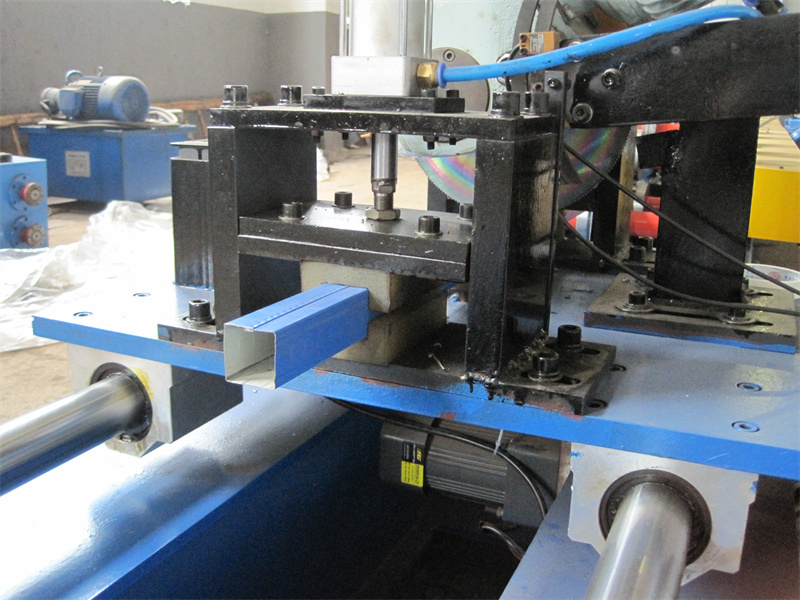
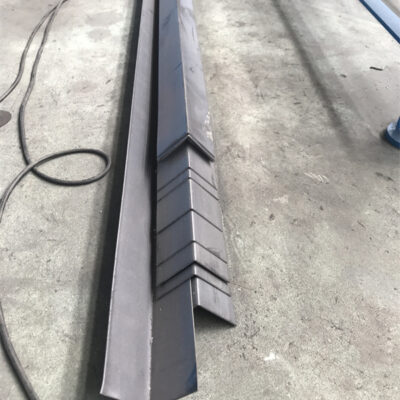
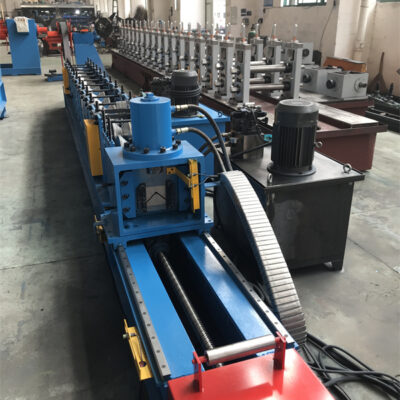
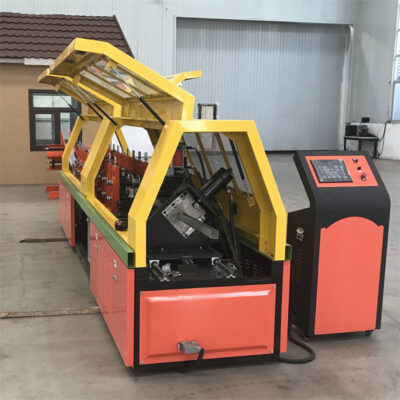
Hollow guide rail production line is designed for making various elevator hollow guide rails with the wall thickness 2.3mm-3.2mm. This new type producing line has advantages like high precision, high processing speed. Its processing speed can be times of traditional one.
Applications
The finished products are widely used in elevator, etc.
Process Flow
Uncoiler —- Shear & Butt Welder —- Accumulator —- Leveling —- Roll Forming — Flying Cutting — Run Out Table
Machine Configurations
| 1. Double Head Uncoiler |
2. Shear & Butt Welder
|
| 3. Horizontal Accumulator | 4. Leveling |
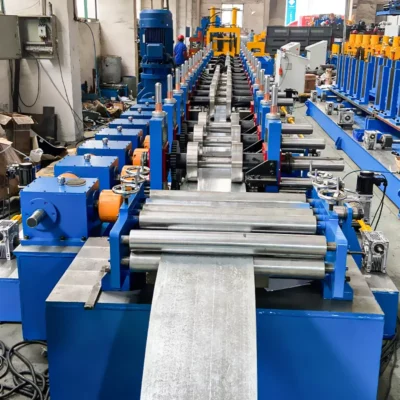
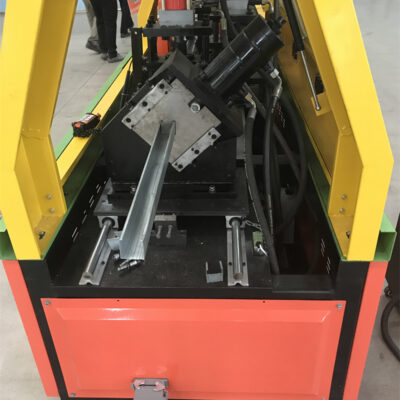
| 5. Roll Forming Machine | 6. Flying Cutting Device |
| 7. Run Out Table |
What is the working principle of guide rail roll forming machine?
A guide rail roll forming machine is designed to produce guide rails, also known as guardrails or safety barriers. The working principle of a guide rail roll forming machine involves several steps:
- Material Feeding: The process begins with a coil of raw material, typically steel or aluminum, which is loaded onto a decoiler. The material is fed into the roll forming machine through a set of rollers.
- Roll Forming: The raw material passes through a series of roller stations, each of which shapes the material gradually. These rollers are strategically positioned and designed to form the desired profile of the guide rail. The rollers exert pressure on the material, bending and forming it into the desired shape.
- Cutting: After the guide rail profile is formed, the roll forming machine employs a cutting mechanism to cut the continuous length of the guide rail into individual sections of the desired length. This can be done using various cutting methods, such as flying cutoff or hydraulic shearing.
- Forming and Finishing: Depending on the specific requirements, additional operations may be performed to enhance the functionality or appearance of the guide rail. These operations may include punching holes for attaching accessories, embossing for added strength, or surface treatments such as galvanizing or painting for corrosion resistance.
- Stacking or Packaging: The finished guide rail sections are then either stacked for further processing or packaged for transportation and delivery.
Throughout the process, the guide rail roll forming machine relies on precise control of the rollers, cutting mechanism, and other components to ensure the accurate formation of the guide rail profile. The machine’s control system coordinates the movement and operation of these components, based on the desired specifications and settings. This allows for consistent production of guide rails with high precision and efficiency.
application of din rail roll forming machine
A DIN rail roll forming machine is specifically designed to produce DIN rails, which are standardized metal rails used in electrical and electronic installations. The application of DIN rail roll forming machines lies in the production of DIN rails for various industries, including:
- Electrical Panel Manufacturing: DIN rails are commonly used in electrical panels to provide a standardized mounting platform for electrical components such as circuit breakers, relays, terminal blocks, and power supplies. The DIN rail roll forming machine is employed to produce DIN rails of different sizes and configurations to meet the specific requirements of electrical panel manufacturers.
- Industrial Automation: DIN rails are extensively used in industrial automation systems to mount and organize various control devices, such as programmable logic controllers (PLCs), motor starters, contactors, and power distribution modules. The DIN rail roll forming machine plays a crucial role in manufacturing DIN rails that are compatible with the standardized mounting dimensions used in industrial automation applications.
- Building Automation: DIN rails are utilized in building automation systems to mount control devices for HVAC (heating, ventilation, and air conditioning), lighting, security systems, and other building management systems. The DIN rail roll forming machine produces DIN rails that enable the easy installation and organization of these control devices within the building automation infrastructure.
- Renewable Energy Systems: DIN rails find applications in renewable energy systems, including solar power installations and wind power systems. They are used to mount components like solar inverters, charge controllers, monitoring devices, and communication equipment. The DIN rail roll forming machine facilitates the production of DIN rails suitable for these renewable energy applications.
- Railway and Transportation: DIN rails are also employed in railway and transportation systems to mount control devices and electrical equipment on trains, trams, and other vehicles. The DIN rail roll forming machine is utilized to manufacture DIN rails that meet the requirements of these transportation systems, ensuring secure and reliable installation of electrical components.
Overall, the application of DIN rail roll forming machines is widespread in industries that rely on standardized mounting systems for electrical and electronic components, providing efficient and reliable solutions for equipment installation and organization.
What are differents between slide rail roll forming machine and din rail roll forming machine?
The difference between a slide rail roll forming machine and a DIN rail roll forming machine can be explained as follows:
- Purpose: A slide rail roll forming machine is primarily used to manufacture slide rails, which are used for guiding, supporting, and facilitating the movement of objects. They are commonly used in machinery, industrial automation systems, conveyor equipment, and other fields. On the other hand, a DIN rail roll forming machine is used to manufacture DIN rails, which are utilized for the installation and fixation of electrical and electronic equipment.
- Shape and Size: Slide rails typically have a U-shaped or C-shaped cross-section and can be single-slot or multi-slot structures. Their dimensions and shapes can be customized based on specific application requirements. DIN rails, on the other hand, adhere to DIN standards and usually have standardized cross-sections and dimensions to facilitate the convenient installation and mounting of electrical and electronic devices.
- Mounting Method: Slide rails are typically installed using bolts, screws, or other fasteners to provide adjustable or movable support and guidance. DIN rails, on the other hand, are usually directly mounted on the bases of electrical or electronic devices using mounting screws or other fasteners.
- Manufacturing Process: The manufacturing processes for slide rail roll forming machines and DIN rail roll forming machines differ slightly. A slide rail roll forming machine shapes and cuts the continuous coil material into the desired slide rail profile using a series of rollers and cutting devices based on the shape and dimensions of the slide rail. A DIN rail roll forming machine, following DIN standards, shapes and cuts the coil material using specific rollers and cutting devices to meet the standard requirements of DIN rails.
In summary, slide rail roll forming machines and DIN rail roll forming machines serve different applications and mounting requirements. Slide rails are used for guiding and supporting the movement of objects, while DIN rails are used for the installation and fixation of electrical and electronic equipment. They differ in terms of shape, size, and manufacturing process to meet specific application needs and standard requirements.

समीक्षा
अभी तक कोई समीक्षा नहीं।